Whiteleg Shrimp
Auto-generated content. This description was generated automatically and is pending editorial review. Inaccuracies are possible. Found a mistake? Contact us.
What it is
Whiteleg shrimp (Penaeus vannamei) is a species of shrimp native to the eastern Pacific Ocean. It is now widely farmed in aquaculture operations, particularly in Asia and Latin America. The shrimp are typically harvested, processed, and frozen for distribution.
Why it's used
Shrimp are a popular seafood choice, often sold fresh, frozen, or canned. They are used in a wide variety of dishes, including pasta, stir-fries, salads, and soups. As a protein source, they add a distinct seafood flavor and texture to foods.
Health notes
Shrimp is a natural food source and not an additive. It is a good source of protein, selenium, and vitamin B12. Some individuals may have allergies to shrimp. The FDA does not regulate shrimp as a food additive. JECFA and EFSA have not evaluated shrimp as a food additive.
Allergen info
Shrimp is one of the 9 major allergens identified by the FDA. It is classified as a shellfish allergen.
Products containing Whiteleg Shrimp
Compare products →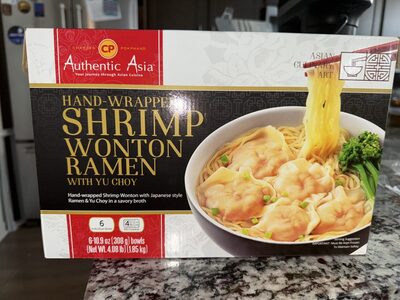 C.P. Food Products, Inc.
Shrimp Wonton Hand-Wrapped Ramen With Yu Choy, Shrimp Wonton With Yu Choy
High in sodium — 23% DV per serving
126kcal
6.8Protein
1.5Fat
20.4Carbs
C.P. Food Products, Inc.
Shrimp Wonton Hand-Wrapped Ramen With Yu Choy, Shrimp Wonton With Yu Choy
High in sodium — 23% DV per serving
126kcal
6.8Protein
1.5Fat
20.4Carbs
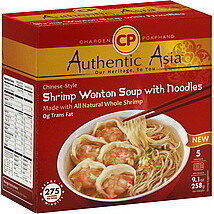 C.P. Food Products, Inc.
Shrimp Wonton Soup With Noodles, Shrimp Wonton With Noodles
High in sodium — 33% DV per serving
101kcal
5.4Protein
0.8Fat
17.8Carbs
C.P. Food Products, Inc.
Shrimp Wonton Soup With Noodles, Shrimp Wonton With Noodles
High in sodium — 33% DV per serving
101kcal
5.4Protein
0.8Fat
17.8Carbs