Auto-generated content.
This description was generated automatically and is pending editorial review.
Inaccuracies are possible. Found a mistake? Contact us.
Source
Not animal-derived
Allergen
No
Role in food
Calcium disodium EDTA is used to help preserve food by binding with metal ions …
What it is
Calcium disodium EDTA is a synthetic compound. It is made by reacting ethylenediaminetetraacetic acid (EDTA) with calcium and sodium salts. It is often used as a chelating agent.
Why it's used
Calcium disodium EDTA is used to help preserve food by binding with metal ions that can cause spoilage. This helps prevent changes in color, flavor, and texture. It is often found in dressings, sauces, canned goods, and beverages.
Health notes
In the US, calcium disodium EDTA is Generally Recognized As Safe (GRAS) by the FDA when used as a food additive. It is also approved as a sequestrant in certain food categories. International bodies like JECFA and EFSA have evaluated it. Studies on its effects at typical dietary levels have generally found it to be safe, with the body excreting most of it.
Allergen info
Calcium disodium EDTA is not derived from any of the FDA's major allergens and does not contain gluten.
Note:
This site presents label data from USDA FoodData Central for general information. It is not medical advice.
Check the package label; formulations change.
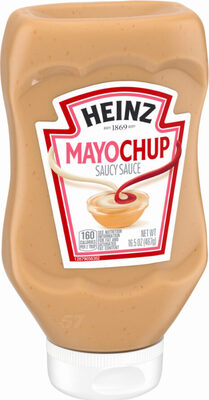 Heinz USA
Mayochup Saucy Sauce, Mayochup
552kcal
0Protein
51.7Fat
13.8Carbs
Heinz USA
Mayochup Saucy Sauce, Mayochup
552kcal
0Protein
51.7Fat
13.8Carbs