Baby Clams
Auto-generated content. This description was generated automatically and is pending editorial review. Inaccuracies are possible. Found a mistake? Contact us.
What it is
Baby clams are small, immature clams harvested from various marine environments. They are typically found in saltwater and are often collected from the ocean floor or farmed. After harvesting, they are usually cleaned and may be sold fresh, frozen, or canned.
Why it's used
Baby clams are primarily used to add a distinct seafood flavor and texture to dishes. They are commonly found in canned seafood products, chowders, pasta sauces, seafood salads, and appetizers. Their small size makes them convenient for use in various recipes without extensive preparation.
Health notes
Baby clams are a natural food source and are not typically regulated as a food additive by the FDA. They are a source of protein, vitamins, and minerals. Like other shellfish, clams can be a source of allergens for sensitive individuals. JECFA and EFSA have evaluated various shellfish species but do not typically set specific evaluations for 'baby clams' as a distinct ingredient.
Allergen info
Clams are classified as shellfish, which is one of the 9 FDA major food allergens. Individuals with shellfish allergies should avoid consuming clams.
Products containing Baby Clams
Compare products →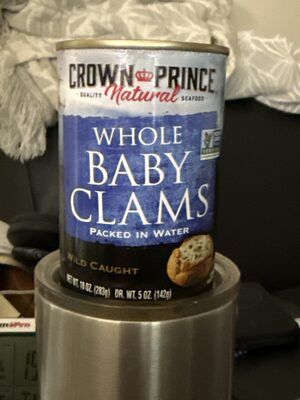 Crown Prince, Inc.
Whole Baby Clams Packed In Water
High in cholesterol — 42% DV per serving
70kcal
13.4Protein
0.7Fat
2.1Carbs
United Imports
Baby Clams
89kcal
16.1Protein
1.8Fat
3.6Carbs
Milky Way Int'L Trading Corp
Baby Clams
54kcal
8.9Protein
0.9Fat
5.4Carbs
Crown Prince, Inc.
Wild Caught Whole Baby Clams
High in sodium — 31% DV per serving
High in cholesterol — 47% DV per serving
85kcal
16.2Protein
1.1Fat
3.5Carbs
Crown Prince, Inc.
Whole Baby Clams Packed In Water
High in cholesterol — 42% DV per serving
70kcal
13.4Protein
0.7Fat
2.1Carbs
United Imports
Baby Clams
89kcal
16.1Protein
1.8Fat
3.6Carbs
Milky Way Int'L Trading Corp
Baby Clams
54kcal
8.9Protein
0.9Fat
5.4Carbs
Crown Prince, Inc.
Wild Caught Whole Baby Clams
High in sodium — 31% DV per serving
High in cholesterol — 47% DV per serving
85kcal
16.2Protein
1.1Fat
3.5Carbs