Balsamic Dressing
Auto-generated content. This description was generated automatically and is pending editorial review. Inaccuracies are possible. Found a mistake? Contact us.
What it is
Balsamic dressing is a salad dressing made primarily from balsamic vinegar, which is a dark, sweet vinegar from Italy. It typically includes olive oil, and may also contain other ingredients like garlic, herbs, spices, and sweeteners.
Why it's used
Balsamic dressing is used to add a tangy, slightly sweet flavor to salads and other dishes. Manufacturers use it as a flavor enhancer and it is commonly found in salad kits, marinated vegetables, and as a dipping sauce.
Health notes
Balsamic dressing is generally recognized as safe (GRAS) by the FDA when used as a food ingredient. Its primary health impacts are related to its components, such as oil and sugar. JECFA has evaluated balsamic vinegar and found no safety concerns. The overall health effects depend on the specific ingredients and amounts consumed, with moderation being key.
Allergen info
Balsamic dressing is not a major allergen. However, some commercial versions may contain added ingredients that are allergens, so checking the product label is recommended.
Products containing Balsamic Dressing
Compare products →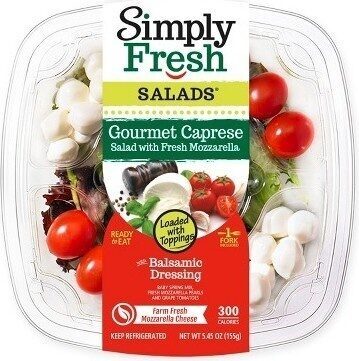 Five Star Gourmet Foods Inc.
Gourmet Caprese With Fresh Mozzarella Salad With Balsamic Dressing, Gourmet Caprese With Fresh Mozzarella
High in sodium — 24% DV per serving
High in saturated fat — 40% DV per serving
194kcal
5.2Protein
15.5Fat
9.1Carbs
Fresh Food Manufacturing
Harvest Salad With Chicken, Harvest With Chicken
High in sodium — 43% DV per serving
High in saturated fat — 20% DV per serving
High in cholesterol — 20% DV per serving
114kcal
8.5Protein
6.4Fat
6.0Carbs
Five Star Gourmet Foods Inc.
Gourmet Caprese With Fresh Mozzarella Salad With Balsamic Dressing, Gourmet Caprese With Fresh Mozzarella
High in sodium — 24% DV per serving
High in saturated fat — 40% DV per serving
194kcal
5.2Protein
15.5Fat
9.1Carbs
Fresh Food Manufacturing
Harvest Salad With Chicken, Harvest With Chicken
High in sodium — 43% DV per serving
High in saturated fat — 20% DV per serving
High in cholesterol — 20% DV per serving
114kcal
8.5Protein
6.4Fat
6.0Carbs