Black Garlic Puree
Auto-generated content. This description was generated automatically and is pending editorial review. Inaccuracies are possible. Found a mistake? Contact us.
What it is
Black garlic is regular garlic that has been aged under controlled heat and humidity for several weeks. This process turns the cloves black, gives them a soft, chewy texture, and creates a sweet, balsamic-like flavor with notes of tamarind and molasses.
Why it's used
Manufacturers use black garlic puree as a flavoring ingredient, adding a complex, savory, and slightly sweet taste to foods. It is commonly found in dips and salsas, seasoning mixes, salts, marinades, and salad dressings.
Health notes
Black garlic is generally recognized as safe (GRAS) by the FDA for use in food. It is a source of antioxidants, though research on its specific health benefits is ongoing. International bodies like JECFA have evaluated garlic and its derivatives, but specific evaluations for black garlic puree may vary. Evidence regarding unique health effects at typical consumption levels is still developing.
Allergen info
Not a major allergen. Black garlic is derived from garlic, which is not one of the nine FDA major allergens. It does not contain gluten.
Products containing Black Garlic Puree
Compare products →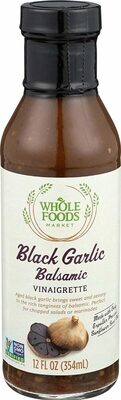 Whole Foods Market, Inc.
Black Garlic Balsamic Vinaigrette, Black Garlic Balsamic
133kcal
0Protein
10Fat
10Carbs
The Kroger Co.
Black Garlic Kalbi Korean Inspired Marinade, Black Garlic Kalbi
133kcal
6.7Protein
3.3Fat
26.7Carbs
Whole Foods Market, Inc.
Black Garlic Guajillo, Black Garlic
33kcal
0Protein
0Fat
6.7Carbs
Cypress Grove Chevre
Little Red Corvette Red Bell Pepper & Black Garlic Fresh Goat Cheese, Little Red Corvette
143kcal
10.7Protein
10.7Fat
3.6Carbs
Chosen Foods, LLC
Black Garlic 100% Avocado Oil Based Mayo, Black Garlic
714kcal
0Protein
78.6Fat
0Carbs
CAMPBELL SOUP COMPANY
Pacific Foods Organic Chicken Bone Broth With Black Garlic and Shiitake Mushroom, 32 oz Carton
High in sodium — 23% DV per serving
17kcal
3.0Protein
0.4Fat
0.4Carbs
Whole Foods Market, Inc.
Black Garlic Balsamic Vinaigrette, Black Garlic Balsamic
133kcal
0Protein
10Fat
10Carbs
The Kroger Co.
Black Garlic Kalbi Korean Inspired Marinade, Black Garlic Kalbi
133kcal
6.7Protein
3.3Fat
26.7Carbs
Whole Foods Market, Inc.
Black Garlic Guajillo, Black Garlic
33kcal
0Protein
0Fat
6.7Carbs
Cypress Grove Chevre
Little Red Corvette Red Bell Pepper & Black Garlic Fresh Goat Cheese, Little Red Corvette
143kcal
10.7Protein
10.7Fat
3.6Carbs
Chosen Foods, LLC
Black Garlic 100% Avocado Oil Based Mayo, Black Garlic
714kcal
0Protein
78.6Fat
0Carbs
CAMPBELL SOUP COMPANY
Pacific Foods Organic Chicken Bone Broth With Black Garlic and Shiitake Mushroom, 32 oz Carton
High in sodium — 23% DV per serving
17kcal
3.0Protein
0.4Fat
0.4Carbs