Buttermilk Cultures
What is Buttermilk Cultures?
Buttermilk cultures are live microorganisms, typically bacteria, used to ferment milk and produce buttermilk. These cultures convert lactose (milk sugar) into lactic acid, giving buttermilk its characteristic tangy flavor and creamy texture. They are a fundamental component in the traditional production of buttermilk.
Is Buttermilk Cultures vegan?
No. Buttermilk Cultures is animal-derived, so it is not vegan.
Is Buttermilk Cultures a major allergen?
Buttermilk is derived from milk, which is one of the 9 FDA major allergens.
What is Buttermilk Cultures used for?
Manufacturers use buttermilk cultures to create the distinct flavor and texture of cultured buttermilk and related dairy products.
Is Buttermilk Cultures safe?
Buttermilk cultures are generally recognized as safe (GRAS) by the FDA for use in food.
Why it's used
Manufacturers use buttermilk cultures to create the distinct flavor and texture of cultured buttermilk and related dairy products. They also act as a natural leavening agent when combined with baking soda in baked goods like pancakes and biscuits, producing a tender crumb. They are found in dairy products, baked goods, and some salad dressings.
Health notes
Buttermilk cultures are generally recognized as safe (GRAS) by the FDA for use in food. The live bacteria in cultured buttermilk are considered probiotics, which may support gut health, though specific health benefits can vary. JECFA has evaluated related bacterial cultures. Evidence regarding the health impacts of probiotics is an active area of research.
Allergen info
Buttermilk is derived from milk, which is one of the 9 FDA major allergens. Therefore, buttermilk cultures are considered a milk allergen.
Foods that contain Buttermilk Cultures
Compare products →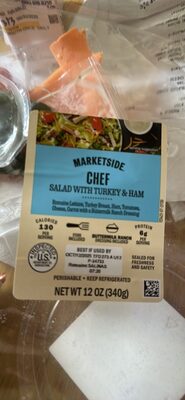 Wal-Mart Stores, Inc.
Chef Salad With Turkey & Ham, Turkey & Ham
130kcal
6Protein
10Fat
4Carbs
Wal-Mart Stores, Inc.
Chef Salad With Turkey & Ham, Turkey & Ham
130kcal
6Protein
10Fat
4Carbs
 Wal-Mart Stores, Inc.
Southwest Style Salad With Chicken, Southwest Style
180kcal
8Protein
13Fat
7Carbs
Wal-Mart Stores, Inc.
Marketside, Dressing, Chipotle Ranch, Chipotle Ranch
300kcal
3.3Protein
30Fat
3.3Carbs
Wal-Mart Stores, Inc.
Marketside, Chunky Dressing, Bleu Cheese, Bleu Cheese
433kcal
3.3Protein
46.7Fat
3.3Carbs
Wal-Mart Stores, Inc.
Marketside, Buttermilk Ranch Dressing
300kcal
3.3Protein
30Fat
3.3Carbs
Wal-Mart Stores, Inc.
Southwest Style Salad With Chicken, Southwest Style
180kcal
8Protein
13Fat
7Carbs
Wal-Mart Stores, Inc.
Marketside, Dressing, Chipotle Ranch, Chipotle Ranch
300kcal
3.3Protein
30Fat
3.3Carbs
Wal-Mart Stores, Inc.
Marketside, Chunky Dressing, Bleu Cheese, Bleu Cheese
433kcal
3.3Protein
46.7Fat
3.3Carbs
Wal-Mart Stores, Inc.
Marketside, Buttermilk Ranch Dressing
300kcal
3.3Protein
30Fat
3.3Carbs
Learn more
Auto-generated content. This description was generated automatically and is pending editorial review. Inaccuracies are possible. Found a mistake? Contact us.