Cellulose Gel Gum
Auto-generated content. This description was generated automatically and is pending editorial review. Inaccuracies are possible. Found a mistake? Contact us.
What it is
Cellulose gel gum is a modified form of cellulose, a natural fiber found in plants. It is produced by chemically treating cellulose to make it soluble in water, creating a white powder that dissolves easily. This process enhances its ability to thicken and stabilize food products.
Why it's used
Manufacturers use cellulose gel gum primarily as a thickener and stabilizer. It helps improve the texture and consistency of foods, preventing ingredients from separating. You'll often find it in dairy products like ice cream and yogurt, as well as in baked goods and sauces.
Health notes
In the U.S., cellulose gel gum is generally recognized as safe (GRAS) by the FDA for use in food. It is not absorbed by the body and passes through the digestive system. International bodies like JECFA and EFSA have evaluated cellulose-based food additives, and they are widely permitted for use. There is no significant scientific controversy regarding its safety at typical consumption levels.
Allergen info
Cellulose gel gum is not derived from any of the nine FDA major allergens. It is also gluten-free.
Products containing Cellulose Gel Gum
Compare products →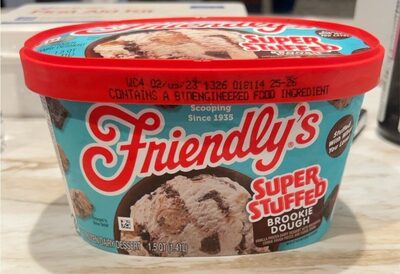 Friendly Ice Cream Corp.
Brookie Dough Frozen Dairy Dessert, Vanilla
High in added sugars — 28% DV per serving
220kcal
3.7Protein
7.3Fat
36.6Carbs
Friendly Ice Cream Corp.
Brookie Dough Frozen Dairy Dessert, Vanilla
High in added sugars — 28% DV per serving
220kcal
3.7Protein
7.3Fat
36.6Carbs
 Friendly Ice Cream Corp.
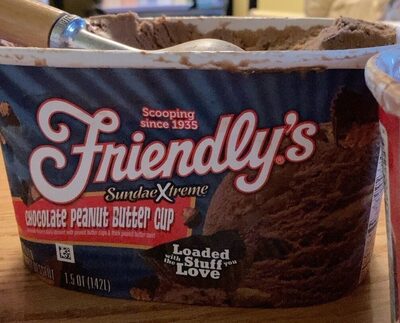
Chocolate Peanut Butter Cup Frozen Dairy Dessert, Chocolate; Peanut
High in saturated fat — 25% DV per serving
High in added sugars — 28% DV per serving
253kcal
6.3Protein
12.6Fat
30.5Carbs
Friendly Ice Cream Corp.
Chocolate Peanut Butter Cup Frozen Dairy Dessert, Chocolate; Peanut
High in saturated fat — 25% DV per serving
High in added sugars — 28% DV per serving
253kcal
6.3Protein
12.6Fat
30.5Carbs
 Friendly Ice Cream Corp.
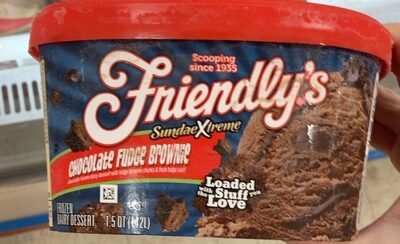
Chocolate Fudge Brownie Frozen Dairy Dessert, Chocolate; Fudge Brownie
High in saturated fat — 20% DV per serving
High in added sugars — 28% DV per serving
229kcal
4.8Protein
7.2Fat
37.4Carbs
Friendly Ice Cream Corp.
Chocolate Fudge Brownie Frozen Dairy Dessert, Chocolate; Fudge Brownie
High in saturated fat — 20% DV per serving
High in added sugars — 28% DV per serving
229kcal
4.8Protein
7.2Fat
37.4Carbs
 Friendly Ice Cream Corp.
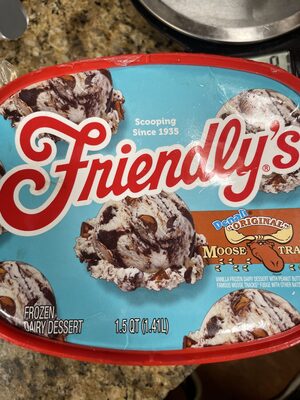
Denali Original Frozen Dairy Dessert, Vanilla; Peanut Butter
High in saturated fat — 22% DV per serving
High in added sugars — 32% DV per serving
253kcal
3.6Protein
12.1Fat
33.7Carbs
Friendly Ice Cream Corp.
Denali Original Frozen Dairy Dessert, Vanilla; Peanut Butter
High in saturated fat — 22% DV per serving
High in added sugars — 32% DV per serving
253kcal
3.6Protein
12.1Fat
33.7Carbs
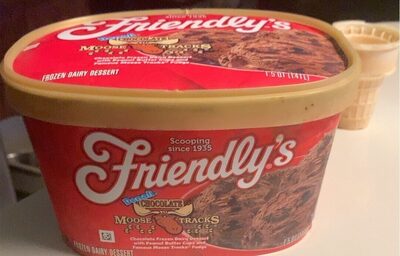 Friendly Ice Cream Corp.
Chocolate Frozen Dairy Dessert, Chocolate; Peanut Butter; Fudge
High in saturated fat — 23% DV per serving
High in added sugars — 32% DV per serving
250kcal
4.8Protein
11.9Fat
33.3Carbs
Friendly Ice Cream Corp.
Chocolate Frozen Dairy Dessert, Chocolate; Peanut Butter; Fudge
High in saturated fat — 23% DV per serving
High in added sugars — 32% DV per serving
250kcal
4.8Protein
11.9Fat
33.3Carbs
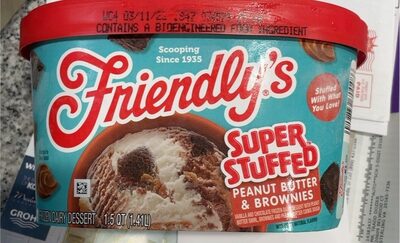 Friendly Ice Cream Corp.
Peanut Butter & Brownies Frozen Dairy Dessert, Peanut Butter
High in added sugars — 24% DV per serving
256kcal
6.1Protein
11.0Fat
32.9Carbs
Friendly Ice Cream Corp.
Peanut Butter & Brownies Frozen Dairy Dessert, Peanut Butter
High in added sugars — 24% DV per serving
256kcal
6.1Protein
11.0Fat
32.9Carbs