Cheese Manicotti
What is Cheese Manicotti?
Cheese manicotti is an Italian-American dish made from large, tube-shaped pasta shells filled with a mixture of cheeses, typically ricotta, mozzarella, and Parmesan. The filled pasta is usually baked in a tomato-based sauce. It is prepared by cooking the pasta, filling it, and then baking it with sauce.
Is Cheese Manicotti vegan?
No. Cheese Manicotti is animal-derived, so it is not vegan.
Is Cheese Manicotti gluten-free?
It also contains gluten.
Is Cheese Manicotti a major allergen?
Contains milk (from cheese) and wheat (from pasta), which are major FDA allergens.
What is Cheese Manicotti used for?
This prepared dish is consumed as a main course.
Is Cheese Manicotti safe?
Cheese manicotti is a composite food product, and its nutritional profile depends on the specific ingredients used, such as the types of cheese, pasta, and sauce.
Why it's used
This prepared dish is consumed as a main course. In packaged foods, it is commonly found in frozen dinners and entrees, offering a convenient meal option. It provides a complete meal with carbohydrates, protein, and fat.
Health notes
Cheese manicotti is a composite food product, and its nutritional profile depends on the specific ingredients used, such as the types of cheese, pasta, and sauce. It typically contains dairy, grains, and can be a source of calories, fat, and sodium. As a food item, it does not have a specific regulatory status from the FDA as an additive, nor has it been evaluated by JECFA or EFSA.
Allergen info
Contains milk (from cheese) and wheat (from pasta), which are major FDA allergens. It also contains gluten.
Foods that contain Cheese Manicotti
Compare products →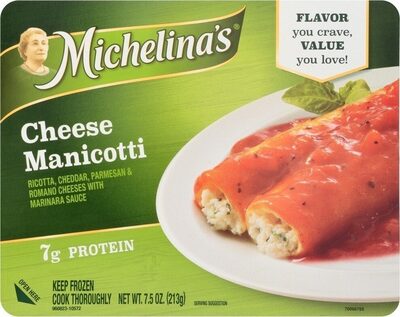
Auto-generated content. This description was generated automatically and is pending editorial review. Inaccuracies are possible. Found a mistake? Contact us.