Auto-generated content.
This description was generated automatically and is pending editorial review.
Inaccuracies are possible. Found a mistake? Contact us.
Source
Not animal-derived
Allergen
No
Role in food
Manufacturers use chickpea miso primarily as a flavoring agent to add a deep, savory, …
What it is
Chickpea miso is a fermented paste made from chickpeas, salt, and a mold culture called Aspergillus oryzae (koji). It is a variation of traditional Japanese miso, which is typically made with soybeans. The fermentation process breaks down the chickpeas, creating a rich, savory, and umami flavor.
Why it's used
Manufacturers use chickpea miso primarily as a flavoring agent to add a deep, savory, and slightly salty taste to foods. It is often found in savory snacks like chips and pretzels, as well as in cheese alternatives and other deli-style products.
Health notes
Chickpea miso is generally recognized as safe (GRAS) by the FDA for use in food. As a fermented food, it contains probiotics which may support gut health, though research is ongoing. International bodies like JECFA have evaluated miso and its components. Evidence on the health effects of specific fermented foods at typical consumption levels is still developing.
Allergen info
Chickpea miso is not derived from any of the nine major allergens. It is gluten-free, as chickpeas do not contain gluten.
Note:
This site presents label data from USDA FoodData Central for general information. It is not medical advice.
Check the package label; formulations change.
 GS1 Mexico
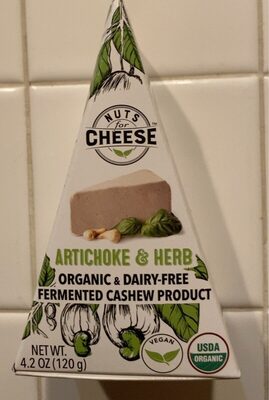
Artichoke & Herb Organic & Dairy-Free Fermented Cashew Product
High in saturated fat — 22% DV per serving
429kcal
10.7Protein
39.3Fat
17.9Carbs
GS1 Mexico
Artichoke & Herb Organic & Dairy-Free Fermented Cashew Product
High in saturated fat — 22% DV per serving
429kcal
10.7Protein
39.3Fat
17.9Carbs