Dry Roasted Brazil Nuts
What is Dry Roasted Brazil Nuts?
Brazil nuts are large, nutrient-dense seeds that grow inside a hard shell on the Brazil nut tree, native to South America. They are typically harvested from wild trees. "Dry roasted" means they have been heated in an oven without oil, which gives them a crunchy texture and toasted flavor.
Is Dry Roasted Brazil Nuts vegan?
Dry Roasted Brazil Nuts is not animal-derived. Products that contain it can still include other animal-derived ingredients, so check the full ingredient list.
Is Dry Roasted Brazil Nuts a major allergen?
Brazil nuts are a tree nut, which is one of the 9 major allergens recognized by the FDA.
What is Dry Roasted Brazil Nuts used for?
Brazil nuts are often eaten as a snack on their own or included in mixed nuts.
Is Dry Roasted Brazil Nuts safe?
Brazil nuts are a good source of selenium, a mineral important for thyroid function and immune health.
Why it's used
Brazil nuts are often eaten as a snack on their own or included in mixed nuts. They can also be used in baked goods, trail mixes, and as a topping for desserts and salads. Their rich, buttery flavor adds a satisfying taste and texture to various foods.
Health notes
Brazil nuts are a good source of selenium, a mineral important for thyroid function and immune health. The FDA considers them safe for consumption. JECFA has evaluated Brazil nuts and found them to be safe. Due to their high selenium content, consuming a large number of Brazil nuts in one sitting can lead to excessive intake of this mineral.
Allergen info
Brazil nuts are a tree nut, which is one of the 9 major allergens recognized by the FDA. People with tree nut allergies should avoid them.
Foods that contain Dry Roasted Brazil Nuts
Compare products →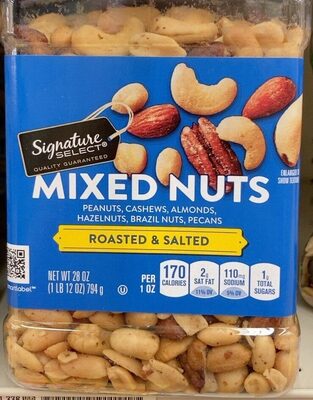 Safeway, Inc.
Roasted & Salted Peanuts, Cashews, Almonds, Hazelnuts, Pecans, Brazil Nuts Mixed Nuts, Roasted & Salted
600kcal
20Protein
56.7Fat
16.7Carbs
Safeway, Inc.
Roasted & Salted Peanuts, Cashews, Almonds, Hazelnuts, Pecans, Brazil Nuts Mixed Nuts, Roasted & Salted
600kcal
20Protein
56.7Fat
16.7Carbs
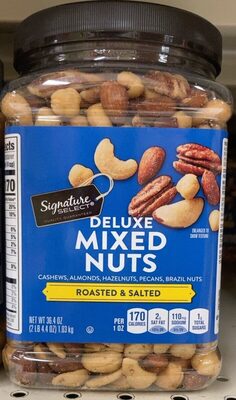 Safeway, Inc.
Roasted & Salted Cashews, Almonds, Pecans, Brazil Nuts, Hazelnuts Deluxe Mixed Nuts, Roasted & Salted
633kcal
16.7Protein
56.7Fat
20Carbs
Safeway, Inc.
Roasted & Salted Mixed Nuts With Peanuts, Cashews, Almonds, Hazelnuts, Pecans, Brazil Nuts, Roasted & Salted
600kcal
20Protein
56.7Fat
16.7Carbs
Safeway, Inc.
Roasted & Salted Cashews, Almonds, Pecans, Brazil Nuts, Hazelnuts Deluxe Mixed Nuts, Roasted & Salted
633kcal
16.7Protein
56.7Fat
20Carbs
Safeway, Inc.
Roasted & Salted Mixed Nuts With Peanuts, Cashews, Almonds, Hazelnuts, Pecans, Brazil Nuts, Roasted & Salted
600kcal
20Protein
56.7Fat
16.7Carbs
Auto-generated content. This description was generated automatically and is pending editorial review. Inaccuracies are possible. Found a mistake? Contact us.