Fully Cooked Pork Skin
What is Fully Cooked Pork Skin?
Fully cooked pork skin is made from the skin of pigs. The skin is typically boiled or simmered until tender, then often fried or baked to achieve a crispy texture. It is a protein-rich ingredient.
Is Fully Cooked Pork Skin vegan?
No. Fully Cooked Pork Skin is animal-derived, so it is not vegan.
Is Fully Cooked Pork Skin gluten-free?
It does not contain gluten.
Is Fully Cooked Pork Skin a major allergen?
Pork skin is not derived from any of the 9 major allergens.
What is Fully Cooked Pork Skin used for?
Manufacturers add pork skin for its savory flavor and crunchy texture, often as a snack or ingredient.
Is Fully Cooked Pork Skin safe?
Pork skin is generally recognized as safe (GRAS) by the FDA for use in food.
Why it's used
Manufacturers add pork skin for its savory flavor and crunchy texture, often as a snack or ingredient. It is commonly found in pickled products like pork rinds, as well as in some savory snacks and appetizers.
Health notes
Pork skin is generally recognized as safe (GRAS) by the FDA for use in food. It is primarily protein and fat. The FDA has not set specific upper intake limits for pork skin. International bodies like JECFA have evaluated similar food ingredients but do not have specific evaluations for pork skin itself. It is a source of collagen, which is being studied for potential benefits to skin and joint health, though more research is needed.
Allergen info
Pork skin is not derived from any of the 9 major allergens. It does not contain gluten.
Foods that contain Fully Cooked Pork Skin
Compare products →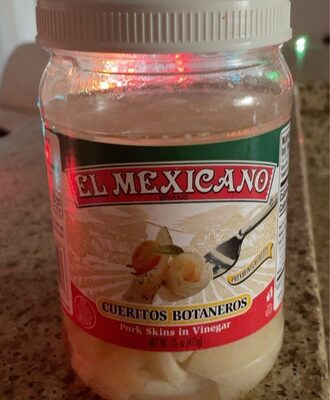 Marquez Brothers International, Inc.
Cueritos Botaneros Pickled Pork Skins In Brine, Cueritos Botaneros
High in sodium — 30% DV per serving
142kcal
0Protein
8.8Fat
0Carbs
Colorado Ranchers, Inc.
Cueritos Pickled Pork Skins, Cueritos Pickled
High in sodium — 31% DV per serving
High in saturated fat — 55% DV per serving
509kcal
8.8Protein
52.6Fat
0Carbs
Villarreal Inc.
Pickled Pork Skins In Brine, Brine
High in sodium — 31% DV per serving
High in saturated fat — 55% DV per serving
—kcal
0Protein
52.6Fat
0Carbs
Marquez Brothers International, Inc.
Cueritos Botaneros Pickled Pork Skins In Brine, Cueritos Botaneros
High in sodium — 30% DV per serving
142kcal
0Protein
8.8Fat
0Carbs
Colorado Ranchers, Inc.
Cueritos Pickled Pork Skins, Cueritos Pickled
High in sodium — 31% DV per serving
High in saturated fat — 55% DV per serving
509kcal
8.8Protein
52.6Fat
0Carbs
Villarreal Inc.
Pickled Pork Skins In Brine, Brine
High in sodium — 31% DV per serving
High in saturated fat — 55% DV per serving
—kcal
0Protein
52.6Fat
0Carbs
Learn more
Auto-generated content. This description was generated automatically and is pending editorial review. Inaccuracies are possible. Found a mistake? Contact us.