Furikake Seasoning
Auto-generated content. This description was generated automatically and is pending editorial review. Inaccuracies are possible. Found a mistake? Contact us.
What it is
Furikake is a dry Japanese seasoning meant to be sprinkled on rice. It is typically made from a mixture of dried fish flakes (like bonito), sesame seeds, seaweed (nori), sugar, and salt. Other ingredients like bonito flakes, bonito extract, soy sauce, and miso can also be included.
Why it's used
Manufacturers add furikake to foods to enhance flavor and add texture. It is most commonly sprinkled on rice, but is also used in sushi, onigiri (rice balls), and as a topping for salads, fish, and vegetables. Its savory, umami-rich profile makes it a versatile seasoning.
Health notes
Furikake is generally recognized as safe (GRAS) by the FDA when used as a seasoning. Its health impact depends on the specific ingredients and amounts consumed. Some varieties may be high in sodium due to added salt and soy sauce. International bodies like JECFA have evaluated many of the individual components of furikake, such as salt and sugar, setting guidelines for their use. Evidence does not suggest adverse effects from typical consumption.
Allergen info
Furikake may contain allergens such as fish, soy, and sesame, depending on the specific ingredients. It is not a major allergen unless it contains one of the nine FDA-listed major allergens. Gluten may be present if soy sauce made with wheat is used.
Products containing Furikake Seasoning
Compare products →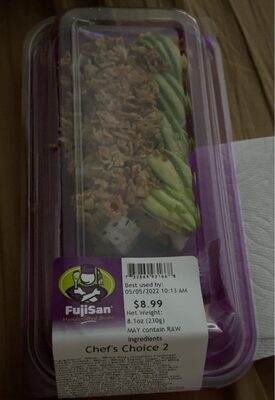 Fuji Food Products Inc.
Chef's Choice 2 Sushi
High in sodium — 27% DV per serving
200kcal
4.4Protein
5.6Fat
27.8Carbs
Fuji Food Products Inc.
Little Sumo Roll, Little Sumo
High in sodium — 37% DV per serving
133kcal
5.8Protein
1.2Fat
24.2Carbs
Welwyn Electronics Inc.
Original Spam Musubi, Original
High in sodium — 41% DV per serving
216kcal
4.0Protein
3.0Fat
41.9Carbs
Welwyn Electronics Inc.
Teriyaki Spam Musubi, Teriyaki
High in sodium — 41% DV per serving
209kcal
4.0Protein
2.0Fat
41.9Carbs
Fuji Food Products Inc.
Kickin' Kanpachi Sushi
High in sodium — 22% DV per serving
133kcal
6.7Protein
5Fat
22.2Carbs
Fuji Food Products Inc.
Chef's Choice 2 Sushi
High in sodium — 27% DV per serving
200kcal
4.4Protein
5.6Fat
27.8Carbs
Fuji Food Products Inc.
Little Sumo Roll, Little Sumo
High in sodium — 37% DV per serving
133kcal
5.8Protein
1.2Fat
24.2Carbs
Welwyn Electronics Inc.
Original Spam Musubi, Original
High in sodium — 41% DV per serving
216kcal
4.0Protein
3.0Fat
41.9Carbs
Welwyn Electronics Inc.
Teriyaki Spam Musubi, Teriyaki
High in sodium — 41% DV per serving
209kcal
4.0Protein
2.0Fat
41.9Carbs
Fuji Food Products Inc.
Kickin' Kanpachi Sushi
High in sodium — 22% DV per serving
133kcal
6.7Protein
5Fat
22.2Carbs