Grated Romano Blend
What is Grated Romano Blend?
Grated Romano Blend is a mixture of cheeses, with Romano cheese being a primary component. Romano cheese is a hard, salty Italian-style cheese, traditionally made from sheep's milk, but can also be made from cow's or goat's milk. The blend may also include other cheeses or ingredients like anti-caking agents.
Is Grated Romano Blend vegan?
No. Grated Romano Blend is animal-derived, so it is not vegan.
Is Grated Romano Blend a major allergen?
This ingredient contains milk, which is one of the nine major food allergens identified by the FDA.
What is Grated Romano Blend used for?
This blend is commonly used in prepared foods, especially pizzas, for its distinct salty and sharp flavor.
Is Grated Romano Blend safe?
As a dairy product, Grated Romano Blend is generally recognized as safe for consumption.
Why it's used
This blend is commonly used in prepared foods, especially pizzas, for its distinct salty and sharp flavor. It contributes to the overall taste and texture of dishes, and melts well when heated, making it popular for baked goods and savory toppings.
Health notes
As a dairy product, Grated Romano Blend is generally recognized as safe for consumption. The FDA regulates dairy products as food ingredients. For individuals with lactose intolerance, consuming cheese may cause digestive discomfort, depending on the specific cheese and blend. There are no specific health controversies unique to 'Grated Romano Blend' itself.
Allergen info
This ingredient contains milk, which is one of the nine major food allergens identified by the FDA.
Foods that contain Grated Romano Blend
Compare products →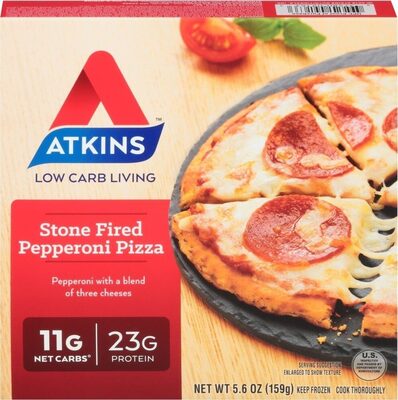 Atkins Nutritionals, Inc.
Stone Fired Pepperoni Pizza With A Blend Of Three Cheeses, Stone Fired Pepperoni Pizza
High in sodium — 47% DV per serving
High in saturated fat — 50% DV per serving
239kcal
14.5Protein
15.7Fat
17.6Carbs
Atkins Nutritionals, Inc.
Stone Fired Cheese Pizza
High in sodium — 40% DV per serving
High in saturated fat — 45% DV per serving
224kcal
14.7Protein
14.7Fat
17.9Carbs
Atkins Nutritionals, Inc.
Stone Fired Vegetable Pizza
High in sodium — 37% DV per serving
High in saturated fat — 40% DV per serving
196kcal
13.5Protein
12.3Fat
17.2Carbs
Atkins Nutritionals, Inc.
Stone Fired Pepperoni Pizza With A Blend Of Three Cheeses, Stone Fired Pepperoni Pizza
High in sodium — 47% DV per serving
High in saturated fat — 50% DV per serving
239kcal
14.5Protein
15.7Fat
17.6Carbs
Atkins Nutritionals, Inc.
Stone Fired Cheese Pizza
High in sodium — 40% DV per serving
High in saturated fat — 45% DV per serving
224kcal
14.7Protein
14.7Fat
17.9Carbs
Atkins Nutritionals, Inc.
Stone Fired Vegetable Pizza
High in sodium — 37% DV per serving
High in saturated fat — 40% DV per serving
196kcal
13.5Protein
12.3Fat
17.2Carbs
Learn more
Auto-generated content. This description was generated automatically and is pending editorial review. Inaccuracies are possible. Found a mistake? Contact us.