Auto-generated content.
This description was generated automatically and is pending editorial review.
Inaccuracies are possible. Found a mistake? Contact us.
Source
Animal-derived
Allergen
No
Role in food
Manufacturers add Romano cheese for its strong, savory flavor and salty taste. It is …
What it is
Romano cheese is a hard, salty Italian-style cheese traditionally made from sheep's milk. However, in the United States, it is often made from cow's milk and is aged for at least 5 months. It has a sharp, tangy flavor and a granular texture.
Why it's used
Manufacturers add Romano cheese for its strong, savory flavor and salty taste. It is commonly used to enhance the flavor of pasta dishes, pizzas, soups, and salads. It can also be grated over vegetables or used as a topping for bread.
Health notes
Romano cheese is generally recognized as safe (GRAS) by the FDA when used as a food ingredient. It is a source of protein, calcium, and other nutrients. JECFA and EFSA have evaluated cheese and dairy products. Like other aged cheeses, it is high in sodium, which may be a concern for individuals monitoring their salt intake.
Allergen info
Romano cheese is derived from milk, which is one of the nine major allergens identified by the FDA. It does not contain gluten.
Products containing Grated Romano Cheese Made From Cow's Milk
Note:
This site presents label data from USDA FoodData Central for general information. It is not medical advice.
Check the package label; formulations change.
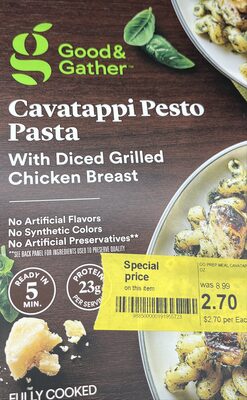 Target Stores
Cavatappi Pesto Pasta With Diced Grilled Chicken Breast, Cavatappi Pesto
High in saturated fat — 22% DV per serving
224kcal
10.9Protein
12.9Fat
17.1Carbs
Target Stores
Cavatappi Pesto Pasta With Diced Grilled Chicken Breast, Cavatappi Pesto
High in saturated fat — 22% DV per serving
224kcal
10.9Protein
12.9Fat
17.1Carbs
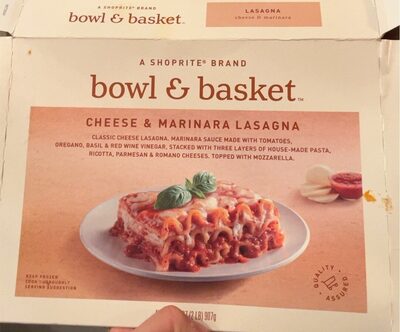 Wakefern Food Corporation
Cheese & Marinara Lasagna, Cheese & Marinara
High in sodium — 28% DV per serving
87kcal
3.9Protein
2.0Fat
13.0Carbs
Wakefern Food Corporation
Cheese & Marinara Lasagna, Cheese & Marinara
High in sodium — 28% DV per serving
87kcal
3.9Protein
2.0Fat
13.0Carbs