Lactose Reduced Whey
What is Lactose Reduced Whey?
Whey is a byproduct of cheesemaking. Lactose-reduced whey is produced by removing most of the lactose (milk sugar) from whey, often through filtration or enzymatic processes. This results in a concentrated source of whey proteins with a lower sugar content.
Is Lactose Reduced Whey vegan?
No. Lactose Reduced Whey is animal-derived, so it is not vegan.
Is Lactose Reduced Whey gluten-free?
It does not contain gluten.
Is Lactose Reduced Whey a major allergen?
Lactose-reduced whey is derived from milk, which is one of the 9 major allergens recognized by the FDA.
What is Lactose Reduced Whey used for?
Manufacturers add lactose-reduced whey to foods as a source of protein and to improve texture and mouthfeel.
Is Lactose Reduced Whey safe?
Lactose-reduced whey is generally recognized as safe (GRAS) by the FDA for use in food.
Why it's used
Manufacturers add lactose-reduced whey to foods as a source of protein and to improve texture and mouthfeel. It is often found in processed meats, baked goods, and nutritional supplements.
Health notes
Lactose-reduced whey is generally recognized as safe (GRAS) by the FDA for use in food. It is a source of high-quality protein, which is important for muscle building and repair. JECFA and EFSA have evaluated whey proteins and their components. No significant health concerns are associated with typical consumption levels.
Allergen info
Lactose-reduced whey is derived from milk, which is one of the 9 major allergens recognized by the FDA. It does not contain gluten.
Foods that contain Lactose Reduced Whey
Compare products →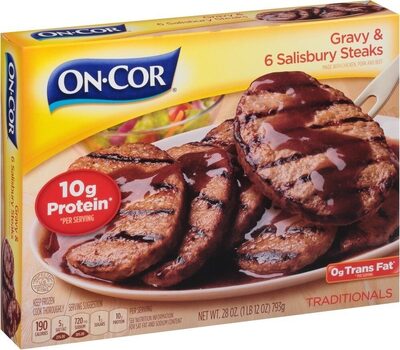 Osi Industries, LLC
Gravy & Salisbury Steaks, Gravy & Salisbury
High in sodium — 28% DV per serving
High in saturated fat — 20% DV per serving
129kcal
6.8Protein
9.1Fat
6.1Carbs
The Moran Group Incorporated
Toasted Onion Gravy & Char-Broiled Patties
High in sodium — 50% DV per serving
High in saturated fat — 30% DV per serving
120kcal
8.2Protein
7.1Fat
6.0Carbs
Osi Industries, LLC
Toasted Onion Gravy & Char-Broiled Patties, Toasted Onion Gravy & Char-Broiled
High in sodium — 40% DV per serving
High in saturated fat — 25% DV per serving
125kcal
7.6Protein
7.6Fat
7.6Carbs
Osi Industries, LLC
Gravy & Salisbury Steaks, Gravy & Salisbury
High in sodium — 28% DV per serving
High in saturated fat — 20% DV per serving
129kcal
6.8Protein
9.1Fat
6.1Carbs
The Moran Group Incorporated
Toasted Onion Gravy & Char-Broiled Patties
High in sodium — 50% DV per serving
High in saturated fat — 30% DV per serving
120kcal
8.2Protein
7.1Fat
6.0Carbs
Osi Industries, LLC
Toasted Onion Gravy & Char-Broiled Patties, Toasted Onion Gravy & Char-Broiled
High in sodium — 40% DV per serving
High in saturated fat — 25% DV per serving
125kcal
7.6Protein
7.6Fat
7.6Carbs
Learn more
Auto-generated content. This description was generated automatically and is pending editorial review. Inaccuracies are possible. Found a mistake? Contact us.