Locust Bean Gum
Auto-generated content. This description was generated automatically and is pending editorial review. Inaccuracies are possible. Found a mistake? Contact us.
What it is
Locust bean gum is a natural gum obtained from the seeds of the carob tree (Ceratonia siliqua), which is native to the Mediterranean region. The seeds are processed to extract the gum, which is a type of polysaccharide.
Why it's used
Manufacturers add locust bean gum to foods primarily as a thickener, stabilizer, and emulsifier. It helps improve texture, prevent ice crystal formation in frozen desserts like ice cream, and thicken sauces and dressings. It is commonly found in dairy products, baked goods, and processed meats.
Health notes
In the United States, the Food and Drug Administration (FDA) considers locust bean gum to be Generally Recognized As Safe (GRAS). The Joint FAO/WHO Expert Committee on Food Additives (JECFA) has evaluated locust bean gum and determined that an Acceptable Daily Intake (ADI) is 'not specified,' indicating a very low level of concern. The European Food Safety Authority (EFSA) has also concluded that it is safe for use as a food additive. At typical intake levels, it is generally well-tolerated, though very high amounts might cause mild digestive discomfort in some individuals.
Allergen info
Locust bean gum is not a major allergen and is not derived from any of the nine major food allergens identified by the FDA. It is also gluten-free.
Products containing Locust Bean Gum
Compare products →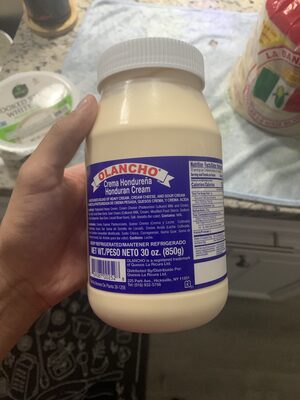 OLANCHO
Honduran Cream
High in saturated fat — 35% DV per serving
357kcal
3.6Protein
39.3Fat
3.6Carbs
THE CRAVE BAR
One Ice Cream Pretzel Bar
High in saturated fat — 55% DV per serving
321kcal
5.8Protein
14.2Fat
35.8Carbs
OLANCHO
Honduran Cream
High in saturated fat — 35% DV per serving
357kcal
3.6Protein
39.3Fat
3.6Carbs
THE CRAVE BAR
One Ice Cream Pretzel Bar
High in saturated fat — 55% DV per serving
321kcal
5.8Protein
14.2Fat
35.8Carbs