Melanogrammus Aeglefinus
Auto-generated content. This description was generated automatically and is pending editorial review. Inaccuracies are possible. Found a mistake? Contact us.
What it is
Haddock is a white, flaky fish native to the North Atlantic Ocean. It is a lean source of protein and is commonly sold fresh or frozen, often as fillets or steaks. It is typically prepared by baking, broiling, frying, or steaming.
Why it's used
Haddock is used as a primary protein source in many dishes, particularly in fish and chips, chowders, and baked fish preparations. Its mild flavor makes it versatile for various culinary applications. It is frequently found in frozen fish products and seafood meals.
Health notes
Haddock is a natural food and not an additive. It is a good source of protein, vitamin B12, and selenium. As a fish, it can contain beneficial omega-3 fatty acids, though in lower amounts than oilier fish. The FDA does not regulate fish as a food additive. Concerns about mercury levels in fish are generally low for haddock compared to larger predatory fish.
Allergen info
Haddock is a fish, which is one of the 9 FDA major allergens. It does not contain gluten.
Products containing Melanogrammus Aeglefinus
Compare products →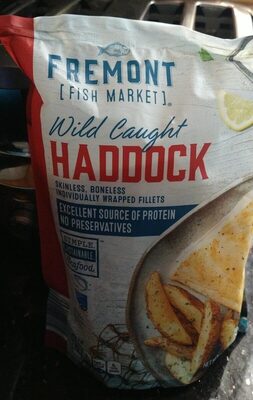 FREMONT
Wild Caught Haddock Skinless, Boneless Individually Wrapped Fillets
High in cholesterol — 20% DV per serving
75kcal
16.8Protein
0.4Fat
0Carbs
Wegmans Food Markets, Inc.
Skinless & Boneless Wild Caught Haddock
High in cholesterol — 20% DV per serving
71kcal
16.8Protein
0.4Fat
0Carbs
Wixter Market
Boneless, Skinless Norwegian Haddock
High in cholesterol — 22% DV per serving
80kcal
19.6Protein
0Fat
0Carbs
FREMONT
Wild Caught Haddock Skinless, Boneless Individually Wrapped Fillets
High in cholesterol — 20% DV per serving
75kcal
16.8Protein
0.4Fat
0Carbs
Wegmans Food Markets, Inc.
Skinless & Boneless Wild Caught Haddock
High in cholesterol — 20% DV per serving
71kcal
16.8Protein
0.4Fat
0Carbs
Wixter Market
Boneless, Skinless Norwegian Haddock
High in cholesterol — 22% DV per serving
80kcal
19.6Protein
0Fat
0Carbs
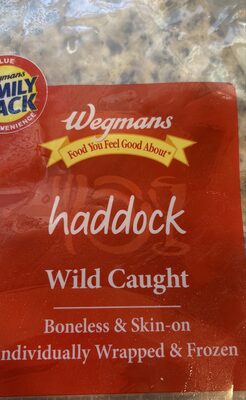 Wegmans Food Markets, Inc.
Wild Caught Skin-On & Boneless Haddock
High in cholesterol — 30% DV per serving
76kcal
16.5Protein
0.6Fat
0Carbs
Wegmans Food Markets, Inc.
Wild Caught Skin-On & Boneless Haddock
High in cholesterol — 30% DV per serving
76kcal
16.5Protein
0.6Fat
0Carbs
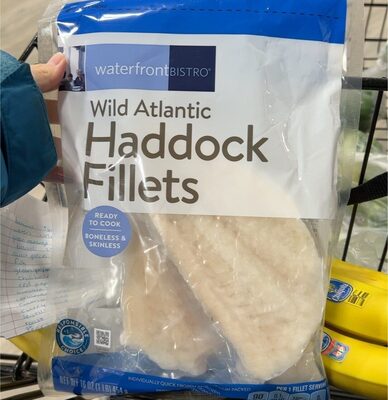 Safeway, Inc.
Wild Atlantic Haddock Fillets, Wild Atlantic Haddock
80kcal
17.7Protein
0.4Fat
0Carbs
Safeway, Inc.
Wild Atlantic Haddock Fillets, Wild Atlantic Haddock
80kcal
17.7Protein
0.4Fat
0Carbs
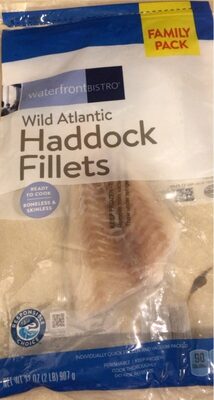 Safeway, Inc.
Wild Atlantic Haddock Fillets, Wild Atlantic Haddock
80kcal
17.7Protein
0.4Fat
0Carbs
Safeway, Inc.
Wild Atlantic Haddock Fillets, Wild Atlantic Haddock
80kcal
17.7Protein
0.4Fat
0Carbs