Pasteurized Process
What is Pasteurized Process?
Pasteurized process cheese is a food product made by blending one or more natural cheeses with an emulsifier and water. The blend is then heated and stirred until it melts and becomes smooth. This process creates a cheese product that melts evenly and has a consistent texture.
Is Pasteurized Process vegan?
No. Pasteurized Process is animal-derived, so it is not vegan.
Is Pasteurized Process gluten-free?
It does not contain gluten.
Is Pasteurized Process a major allergen?
Pasteurized process cheese is derived from milk and is therefore a major allergen.
What is Pasteurized Process used for?
Manufacturers add pasteurized process cheese to improve meltability and prevent oil separation.
Is Pasteurized Process safe?
Pasteurized process cheese is generally recognized as safe (GRAS) by the FDA.
Why it's used
Manufacturers add pasteurized process cheese to improve meltability and prevent oil separation. It is commonly used in processed cheese slices, cheese sauces, and as a topping for snacks like nachos and French fries. It is also found in frozen appetizers and prepared meals.
Health notes
Pasteurized process cheese is generally recognized as safe (GRAS) by the FDA. It is a source of calcium and protein. The FDA has not set specific upper intake levels for process cheese itself, but like all foods, moderation is advised as part of a balanced diet. No significant health controversies are associated with its typical consumption.
Allergen info
Pasteurized process cheese is derived from milk and is therefore a major allergen. It does not contain gluten.
Foods that contain Pasteurized Process
Compare products →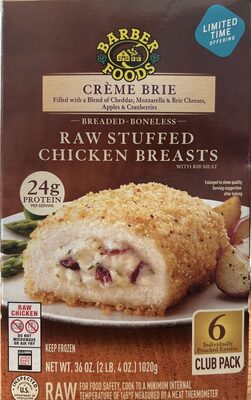 AdvancePierre Foods Inc.
Creme Brie Raw Stuffed Chicken Breasts With Rib Meat, Creme Brie
High in sodium — 26% DV per serving
High in saturated fat — 35% DV per serving
High in cholesterol — 30% DV per serving
220kcal
16.7Protein
10.1Fat
15.5Carbs
Mozian & Associates, Inc.
Ham And Swiss Cheese Organic Bread Sandwich, Ham And Swiss Cheese
High in sodium — 65% DV per serving
High in saturated fat — 25% DV per serving
150kcal
13.7Protein
4.8Fat
10.1Carbs
AdvancePierre Foods Inc.
Creme Brie & Apple Breaded Raw Stuffed Chicken Breasts With Rib Meat, Creme Brie & Apple
High in sodium — 30% DV per serving
High in saturated fat — 25% DV per serving
High in cholesterol — 21% DV per serving
200kcal
13.6Protein
10Fat
14.3Carbs
Tyson Foods Inc.
Barber Foods Signature Supreme Uncooked Breaded Crme Brie and Apple Boneless Stuffed Chicken Breasts, 6 oz.
211kcal
14.3Protein
10.3Fat
15.3Carbs
AdvancePierre Foods Inc.
Creme Brie Raw Stuffed Chicken Breasts With Rib Meat, Creme Brie
High in sodium — 26% DV per serving
High in saturated fat — 35% DV per serving
High in cholesterol — 30% DV per serving
220kcal
16.7Protein
10.1Fat
15.5Carbs
Mozian & Associates, Inc.
Ham And Swiss Cheese Organic Bread Sandwich, Ham And Swiss Cheese
High in sodium — 65% DV per serving
High in saturated fat — 25% DV per serving
150kcal
13.7Protein
4.8Fat
10.1Carbs
AdvancePierre Foods Inc.
Creme Brie & Apple Breaded Raw Stuffed Chicken Breasts With Rib Meat, Creme Brie & Apple
High in sodium — 30% DV per serving
High in saturated fat — 25% DV per serving
High in cholesterol — 21% DV per serving
200kcal
13.6Protein
10Fat
14.3Carbs
Tyson Foods Inc.
Barber Foods Signature Supreme Uncooked Breaded Crme Brie and Apple Boneless Stuffed Chicken Breasts, 6 oz.
211kcal
14.3Protein
10.3Fat
15.3Carbs
Learn more
Auto-generated content. This description was generated automatically and is pending editorial review. Inaccuracies are possible. Found a mistake? Contact us.