Pecorino Romano Cheese Pdo
What is Pecorino Romano Cheese Pdo?
Pecorino Romano is a hard, salty Italian cheese made from 100% sheep's milk. It is produced in specific regions of Italy, including Lazio, Sardinia, and parts of Tuscany. The cheese is aged for at least five months, giving it a sharp, tangy flavor and a crumbly texture.
Is Pecorino Romano Cheese Pdo vegan?
No. Pecorino Romano Cheese Pdo is animal-derived, so it is not vegan.
Is Pecorino Romano Cheese Pdo gluten-free?
It does not contain gluten.
Is Pecorino Romano Cheese Pdo a major allergen?
Pecorino Romano is derived from milk, which is one of the 9 FDA major allergens.
What is Pecorino Romano Cheese Pdo used for?
Manufacturers add Pecorino Romano for its strong, salty flavor and umami taste, which enhances savory dishes.
Is Pecorino Romano Cheese Pdo safe?
Pecorino Romano is a dairy product and a good source of protein and calcium.
Why it's used
Manufacturers add Pecorino Romano for its strong, salty flavor and umami taste, which enhances savory dishes. It is commonly grated over pasta, soups, and salads, and used as a key ingredient in sauces and baked goods like pizza.
Health notes
Pecorino Romano is a dairy product and a good source of protein and calcium. Like other aged cheeses, it is high in sodium, and consumers mindful of sodium intake should consider this. The FDA regulates cheese as a food product. International bodies like EFSA have not specifically evaluated Pecorino Romano as a distinct food ingredient.
Allergen info
Pecorino Romano is derived from milk, which is one of the 9 FDA major allergens. It does not contain gluten.
Foods that contain Pecorino Romano Cheese Pdo
Compare products →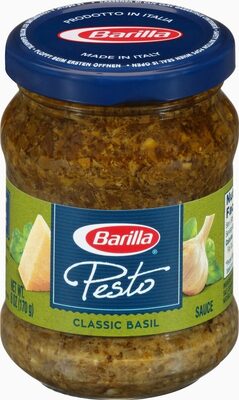 Barilla G & R F.Lli S.P.A.
Traditional Basil Pesto
High in sodium — 26% DV per serving
367kcal
5Protein
35Fat
6.7Carbs
Barilla G & R F.Lli S.P.A.
Traditional Basil Pesto Sauce
High in sodium — 26% DV per serving
333kcal
5Protein
31.7Fat
8.3Carbs
Harris-Teeter Inc.
Four Cheese Topped With Mozzarella, Hard Cheese, Asiago Pdo And Pecorino Romano Pdo Stone Hearth Wood Fired Sourdough Pizza, Four Cheese
High in sodium — 41% DV per serving
High in saturated fat — 60% DV per serving
274kcal
10.7Protein
13.1Fat
28.6Carbs
Alanric Food Distributors, Inc.
Extra Virgin Olive Oil Pesto Sauce
467kcal
3.3Protein
46.7Fat
3.3Carbs
Barilla G & R F.Lli S.P.A.
Traditional Basil Pesto
High in sodium — 26% DV per serving
367kcal
5Protein
35Fat
6.7Carbs
Barilla G & R F.Lli S.P.A.
Traditional Basil Pesto Sauce
High in sodium — 26% DV per serving
333kcal
5Protein
31.7Fat
8.3Carbs
Harris-Teeter Inc.
Four Cheese Topped With Mozzarella, Hard Cheese, Asiago Pdo And Pecorino Romano Pdo Stone Hearth Wood Fired Sourdough Pizza, Four Cheese
High in sodium — 41% DV per serving
High in saturated fat — 60% DV per serving
274kcal
10.7Protein
13.1Fat
28.6Carbs
Alanric Food Distributors, Inc.
Extra Virgin Olive Oil Pesto Sauce
467kcal
3.3Protein
46.7Fat
3.3Carbs
Learn more
Auto-generated content. This description was generated automatically and is pending editorial review. Inaccuracies are possible. Found a mistake? Contact us.