Penicillium Roqueforti Mold Spore
What is Penicillium Roqueforti Mold Spore?
Penicillium roqueforti is a type of mold used to produce the characteristic blue-green veining and flavor in blue cheeses, such as Roquefort and Stilton. It is a naturally occurring mold that is cultivated on a large scale for use in cheesemaking. The mold spores are introduced to the cheese curd, where they grow and develop during the aging process.
Is Penicillium Roqueforti Mold Spore vegan?
Penicillium Roqueforti Mold Spore is not animal-derived. Products that contain it can still include other animal-derived ingredients, so check the full ingredient list.
Is Penicillium Roqueforti Mold Spore gluten-free?
It does not contain gluten.
Is Penicillium Roqueforti Mold Spore a major allergen?
Not a major allergen.
What is Penicillium Roqueforti Mold Spore used for?
This mold is primarily used as a starter culture in the production of blue cheeses, imparting a distinct sharp, tangy flavor and aroma.
Is Penicillium Roqueforti Mold Spore safe?
Penicillium roqueforti is generally recognized as safe (GRAS) by the FDA for use in food.
Why it's used
This mold is primarily used as a starter culture in the production of blue cheeses, imparting a distinct sharp, tangy flavor and aroma. It is essential for creating the characteristic blue-green marbling found in these types of cheeses. Manufacturers add it to cheese products and foods that aim to replicate or enhance a blue cheese flavor profile.
Health notes
Penicillium roqueforti is generally recognized as safe (GRAS) by the FDA for use in food. It is a natural component of many fermented foods and has been consumed for centuries. International bodies like JECFA have evaluated similar mold cultures used in food production. There are no widespread health controversies associated with its consumption at typical levels.
Allergen info
Not a major allergen. It is a mold, not derived from any of the 9 major allergens. It does not contain gluten.
Foods that contain Penicillium Roqueforti Mold Spore
Compare products →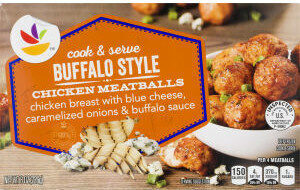 Ahold USA, Inc.
Chicken Meatballs, Buffalo Style
High in saturated fat — 20% DV per serving
High in cholesterol — 25% DV per serving
167kcal
15.6Protein
10Fat
4.4Carbs
Ahold USA, Inc.
Stuffed Polpette, Bleu Cheese & Bacon
High in saturated fat — 20% DV per serving
188kcal
20Protein
15.3Fat
4.7Carbs
Stuffed Foods LLC
Buffalo Style Chicken And Blue Cheese Bites
High in sodium — 24% DV per serving
224kcal
16.5Protein
7.1Fat
21.2Carbs
Stuffed Foods LLC
Roasted Chicken & Kale Ravioli With A Peppercorn Cheese Sauce
High in sodium — 23% DV per serving
High in saturated fat — 40% DV per serving
High in cholesterol — 25% DV per serving
207kcal
12Protein
10Fat
18.7Carbs
Ahold USA, Inc.
Chicken Meatballs, Buffalo Style
High in saturated fat — 20% DV per serving
High in cholesterol — 25% DV per serving
167kcal
15.6Protein
10Fat
4.4Carbs
Ahold USA, Inc.
Stuffed Polpette, Bleu Cheese & Bacon
High in saturated fat — 20% DV per serving
188kcal
20Protein
15.3Fat
4.7Carbs
Stuffed Foods LLC
Buffalo Style Chicken And Blue Cheese Bites
High in sodium — 24% DV per serving
224kcal
16.5Protein
7.1Fat
21.2Carbs
Stuffed Foods LLC
Roasted Chicken & Kale Ravioli With A Peppercorn Cheese Sauce
High in sodium — 23% DV per serving
High in saturated fat — 40% DV per serving
High in cholesterol — 25% DV per serving
207kcal
12Protein
10Fat
18.7Carbs
Learn more
Auto-generated content. This description was generated automatically and is pending editorial review. Inaccuracies are possible. Found a mistake? Contact us.