Penicillium Roquefortij
What is Penicillium Roquefortij?
Penicillium roqueforti is a type of mold used to make blue-veined cheeses, such as Roquefort, Gorgonzola, and Stilton. It is a naturally occurring mold that grows on rye or wheat bread, or it can be cultured in a laboratory. The mold gives blue cheese its characteristic sharp flavor and pungent aroma.
Is Penicillium Roquefortij a major allergen?
Penicillium roqueforti itself is not one of the 9 major allergens.
What is Penicillium Roquefortij used for?
This mold is used as a starter culture in the production of blue cheeses.
Is Penicillium Roquefortij safe?
Penicillium roqueforti is generally recognized as safe (GRAS) by the FDA for use in food.
Why it's used
This mold is used as a starter culture in the production of blue cheeses. It is added to the cheese curd to create the distinctive blue veins and complex flavor profile. It is most commonly found in blue cheese itself, and in foods that feature blue cheese as a primary ingredient.
Health notes
Penicillium roqueforti is generally recognized as safe (GRAS) by the FDA for use in food. It is a natural component of many traditional cheeses and is not associated with adverse health effects when consumed as part of a normal diet. International bodies like EFSA have also evaluated molds used in cheesemaking, and no specific concerns have been raised regarding this organism in the context of its use in cheese.
Allergen info
Penicillium roqueforti itself is not one of the 9 major allergens. However, it is used to produce blue cheese, which is derived from milk and therefore contains milk (a major allergen).
Foods that contain Penicillium Roquefortij
Compare products →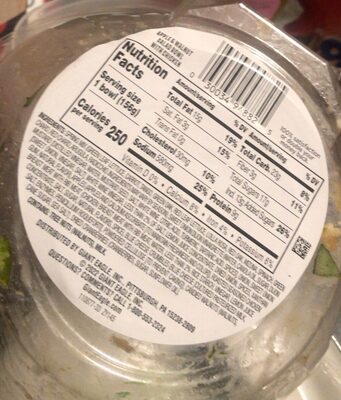 Giant Eagle, Inc.
Apple & Walnut Salad Bowl With Chicken, Apple & Walnut With Chicken
160kcal
5.8Protein
9.6Fat
14.7Carbs
Giant Eagle, Inc.
Apple & Walnut Salad Bowl With Chicken, Apple & Walnut With Chicken
160kcal
5.8Protein
9.6Fat
14.7Carbs
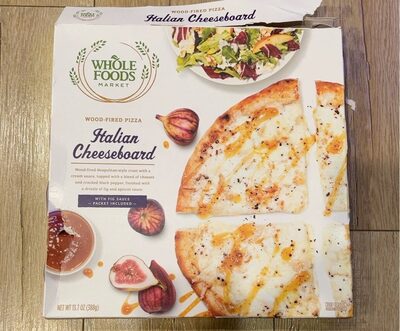 Whole Foods Market, Inc.
Unbleached Wheat Flour Italian Cheeseboard Wood-Fired Pizza, Unbleached Wheat Flour Italian Cheeseboard
High in sodium — 25% DV per serving
High in saturated fat — 40% DV per serving
279kcal
10.8Protein
13.2Fat
30.2Carbs
Delhaize America, Inc.
Chicken & Bacon White Chicken Meat, Blue Cheese Crumbles Hard-Cooked Eggs, Tomato, And Bacon In A Javash Wrap, Enjoy With Blue Cheese Dressing. Cobb Salad Wrap, Chicken & Bacon
High in sodium — 55% DV per serving
High in saturated fat — 35% DV per serving
High in cholesterol — 39% DV per serving
252kcal
12.8Protein
14.2Fat
17.4Carbs
Whole Foods Market, Inc.
Unbleached Wheat Flour Italian Cheeseboard Wood-Fired Pizza, Unbleached Wheat Flour Italian Cheeseboard
High in sodium — 25% DV per serving
High in saturated fat — 40% DV per serving
279kcal
10.8Protein
13.2Fat
30.2Carbs
Delhaize America, Inc.
Chicken & Bacon White Chicken Meat, Blue Cheese Crumbles Hard-Cooked Eggs, Tomato, And Bacon In A Javash Wrap, Enjoy With Blue Cheese Dressing. Cobb Salad Wrap, Chicken & Bacon
High in sodium — 55% DV per serving
High in saturated fat — 35% DV per serving
High in cholesterol — 39% DV per serving
252kcal
12.8Protein
14.2Fat
17.4Carbs
Learn more
Auto-generated content. This description was generated automatically and is pending editorial review. Inaccuracies are possible. Found a mistake? Contact us.