Auto-generated content.
This description was generated automatically and is pending editorial review.
Inaccuracies are possible. Found a mistake? Contact us.
Source
Animal-derived
Allergen
No
Role in food
Pork shoulder is a versatile cut used in many dishes. It is often slow-cooked, …
What it is
Pork shoulder, also known as pork butt or Boston butt, is a cut of meat from the upper part of the pig's shoulder. It is known for its rich flavor and marbling, making it tender and juicy when cooked.
Why it's used
Pork shoulder is a versatile cut used in many dishes. It is often slow-cooked, braised, or smoked for pulled pork, roasts, and stews. It can also be ground for sausages and other processed pork products.
Health notes
Pork shoulder is a source of protein and various nutrients. The US FDA regulates meat products to ensure safety and wholesomeness. Like all meats, it contains saturated fat and cholesterol, and dietary guidelines recommend limiting intake of saturated fats. JECFA has evaluated pork as a food source.
Allergen info
Pork shoulder is not derived from any of the 9 FDA major allergens. It does not contain gluten.
Note:
This site presents label data from USDA FoodData Central for general information. It is not medical advice.
Check the package label; formulations change.
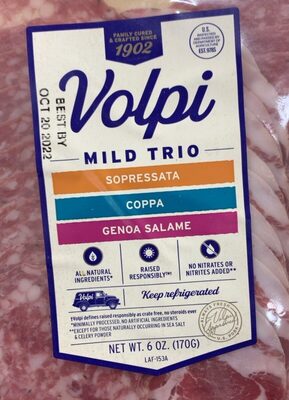 John Volpi & Co., Inc.
Mild Trio Coppa Genoa Salame Sopressa, Mild Trio
High in sodium — 22% DV per serving
429kcal
25Protein
32.1Fat
3.6Carbs
John Volpi & Co., Inc.
Mild Trio Coppa Genoa Salame Sopressa, Mild Trio
High in sodium — 22% DV per serving
429kcal
25Protein
32.1Fat
3.6Carbs