Turkey Hot Dog
Auto-generated content. This description was generated automatically and is pending editorial review. Inaccuracies are possible. Found a mistake? Contact us.
What it is
A turkey hot dog is a processed meat product made from ground turkey, often combined with water, seasonings, and sometimes other ingredients like binders or curing agents. The mixture is formed into a sausage shape, cooked, and typically smoked.
Why it's used
Turkey hot dogs are consumed as a main dish or snack, often grilled, boiled, or pan-fried. Manufacturers use them as a primary component in prepared foods, such as corn dogs or other frozen meals.
Health notes
Turkey hot dogs are regulated by the FDA as a food product. As a processed meat, they can be high in sodium and saturated fat; the Dietary Guidelines for Americans (2025-2030) recommend limiting saturated fat to less than 10% of daily calories, and the FDA Daily Value for sodium is 2,300 mg. The International Agency for Research on Cancer (IARC) classifies processed meat, including hot dogs, as "carcinogenic to humans" (Group 1), based on sufficient evidence that consumption causes colorectal cancer. JECFA and EFSA evaluate food additives, not whole food products like turkey hot dogs.
Allergen info
Turkey is not one of the 9 FDA major allergens. However, turkey hot dogs may contain other ingredients that are major allergens, such as wheat or soy, which would be listed on the product label.
Products containing Turkey Hot Dog
Compare products →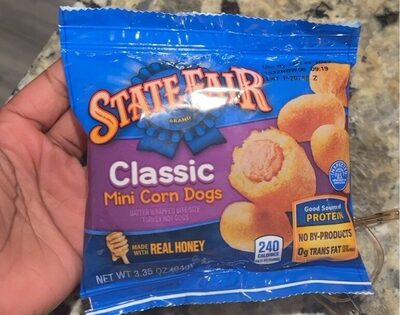 The Hillshire Brands Company
Classic Mini Corn Dogs Batter Wrapped Bite Size Turkey Hot Dogs, Classic
High in sodium — 27% DV per serving
255kcal
9.6Protein
16.0Fat
20.2Carbs
The Hillshire Brands Company
Mini Corn Dogs
High in sodium — 21% DV per serving
317kcal
7.3Protein
18.3Fat
32.9Carbs
The Hillshire Brands Company
Classic Mini Corn Dogs Batter Wrapped Bite Size Turkey Hot Dogs, Classic
High in sodium — 27% DV per serving
255kcal
9.6Protein
16.0Fat
20.2Carbs
The Hillshire Brands Company
Mini Corn Dogs
High in sodium — 21% DV per serving
317kcal
7.3Protein
18.3Fat
32.9Carbs
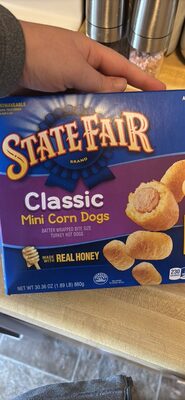 The Hillshire Brands Company
Classic Mini Corn Dogs, Classic
High in sodium — 23% DV per serving
245kcal
7.5Protein
14.9Fat
19.1Carbs
The Hillshire Brands Company
Classic Mini Corn Dogs, Classic
High in sodium — 23% DV per serving
245kcal
7.5Protein
14.9Fat
19.1Carbs