Whole Wheat Flour Bleached
Auto-generated content. This description was generated automatically and is pending editorial review. Inaccuracies are possible. Found a mistake? Contact us.
What it is
Whole wheat flour is made from the entire wheat kernel, including the bran, germ, and endosperm. The 'bleached' designation means it has been treated with a bleaching agent, such as chlorine gas or benzoyl peroxide, to whiten the flour and age it more quickly. This process can slightly alter the flour's protein structure.
Why it's used
Manufacturers use bleached whole wheat flour for its baking properties, providing structure and texture in baked goods. It is commonly found in products like breads, rolls, pizza crusts, and some cookies and baking mixes.
Health notes
In the US, bleached whole wheat flour is generally recognized as safe (GRAS) by the FDA. The bleaching process does not significantly alter the nutritional value of the whole grain. Regulatory bodies like JECFA and EFSA have evaluated flour and its processing aids. Evidence does not suggest adverse health effects from consuming bleached whole wheat flour at typical dietary levels.
Allergen info
Wheat is one of the 9 FDA major allergens. Therefore, bleached whole wheat flour contains wheat and is not safe for individuals with a wheat allergy. It also contains gluten.
Products containing Whole Wheat Flour Bleached
Compare products →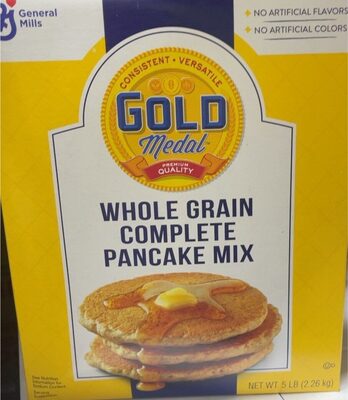 GENERAL MILLS SALES INC.
Gold Medal Whole Grain Complete Pancake Mix
High in sodium — 24% DV per serving
380kcal
8Protein
7Fat
70Carbs
GENERAL MILLS SALES INC.
Gold Medal Whole Grain Complete Pancake Mix
High in sodium — 24% DV per serving
380kcal
8Protein
7Fat
70Carbs