Auto-generated content.
This description was generated automatically and is pending editorial review.
Inaccuracies are possible. Found a mistake? Contact us.
Source
Not animal-derived
Allergen
No
Role in food
These ingredients are commonly used in baking to make bread, cakes, cookies, and pastries …
What it is
Yeast and soda are both leavening agents, meaning they help doughs and batters rise to create a lighter texture. Yeast is a living microorganism that produces carbon dioxide gas when it feeds on sugars. Baking soda, or sodium bicarbonate, is a chemical leavener that reacts with acidic ingredients to produce carbon dioxide.
Why it's used
These ingredients are commonly used in baking to make bread, cakes, cookies, and pastries rise. They are also found in processed snacks like pretzels and chips to achieve a desired airy or crispy texture. Manufacturers use them for their ability to create volume and a pleasing mouthfeel.
Health notes
Yeast and baking soda are generally recognized as safe (GRAS) by the FDA for use in food. Consuming typical amounts found in food is not associated with adverse health effects. International bodies like JECFA and EFSA have evaluated yeast and sodium bicarbonate; JECFA has established acceptable daily intakes for sodium bicarbonate. Evidence does not suggest significant health concerns at levels typically consumed.
Allergen info
Yeast is not one of the 9 FDA major allergens. Baking soda is a mineral and not an allergen. Gluten is not present in either ingredient.
Note:
This site presents label data from USDA FoodData Central for general information. It is not medical advice.
Check the package label; formulations change.
 Astor Chocolate Corp.
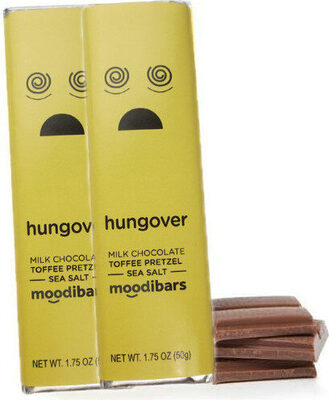
Moodibars, Milk Chocolate Toffee Pretzel Sea Salt
High in saturated fat — 40% DV per serving
High in added sugars — 46% DV per serving
500kcal
6Protein
26Fat
60Carbs
Astor Chocolate Corp.
Moodibars, Milk Chocolate Toffee Pretzel Sea Salt
High in saturated fat — 40% DV per serving
High in added sugars — 46% DV per serving
500kcal
6Protein
26Fat
60Carbs