Dried Nori
Auto-generated content. This description was generated automatically and is pending editorial review. Inaccuracies are possible. Found a mistake? Contact us.
What it is
Dried nori is a type of edible seaweed, specifically a red algae. It is cultivated in the ocean, harvested, and then dried into thin sheets. Nori is a staple in Japanese cuisine and is widely used for its savory flavor and nutritional content.
Why it's used
Nori is primarily used as a wrapper for sushi rolls and onigiri (rice balls). It can also be crumbled and used as a seasoning for soups, noodles, and rice dishes. Manufacturers use it for its distinct umami flavor and to add a visual appeal to packaged foods.
Health notes
Nori is generally recognized as safe (GRAS) by the FDA for use in food. It is a good source of iodine, vitamins, and minerals. The Joint FAO/WHO Expert Committee on Food Additives (JECFA) has evaluated nori and found it to have no safety concerns. Due to its iodine content, excessive consumption could potentially affect thyroid function in sensitive individuals, but this is not a concern at typical dietary intake levels.
Allergen info
Nori is not one of the nine major allergens identified by the FDA. It is also naturally gluten-free.
Products containing Dried Nori
Compare products →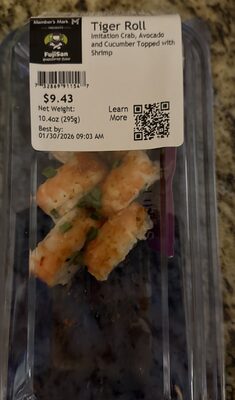 Fuji Food Products Inc.
Avocado, Cucumber, And Surimi Topped With Shrimp
High in sodium — 21% DV per serving
156kcal
4.4Protein
3.3Fat
27.8Carbs
Fuji Food Products Inc.
Sushi Party Tray
High in sodium — 20% DV per serving
167kcal
3.3Protein
4.4Fat
26.7Carbs
Fuji Food Products Inc.
Onigiri Spicy Tuna
91kcal
7.1Protein
0.5Fat
14.1Carbs
Sweet Earth Natural Foods
Kyoto Made With Organic Broccoli, Carrots & Edamame Stir Fry, Kyoto
High in sodium — 24% DV per serving
118kcal
4.7Protein
5.1Fat
13.7Carbs
Nestle Usa-Frozen Food Division
Japanese Style Chicken Ramen White Meat Chicken, Bok Choy & Corn With Asian Style Noodles In A Savory Chicken Stock, Japanese Style Chicken
High in sodium — 37% DV per serving
126kcal
9.1Protein
2.5Fat
16.7Carbs
Nestle Usa-Frozen Food Division
Vegetable Miso Soup Shiitake Mushrooms & Broccoli With Asian Style Noodles In A Miso Broth, Vegetable Miso
High in sodium — 31% DV per serving
91kcal
3.5Protein
1.0Fat
17.2Carbs
Fuji Food Products Inc.
Avocado, Cucumber, And Surimi Topped With Shrimp
High in sodium — 21% DV per serving
156kcal
4.4Protein
3.3Fat
27.8Carbs
Fuji Food Products Inc.
Sushi Party Tray
High in sodium — 20% DV per serving
167kcal
3.3Protein
4.4Fat
26.7Carbs
Fuji Food Products Inc.
Onigiri Spicy Tuna
91kcal
7.1Protein
0.5Fat
14.1Carbs
Sweet Earth Natural Foods
Kyoto Made With Organic Broccoli, Carrots & Edamame Stir Fry, Kyoto
High in sodium — 24% DV per serving
118kcal
4.7Protein
5.1Fat
13.7Carbs
Nestle Usa-Frozen Food Division
Japanese Style Chicken Ramen White Meat Chicken, Bok Choy & Corn With Asian Style Noodles In A Savory Chicken Stock, Japanese Style Chicken
High in sodium — 37% DV per serving
126kcal
9.1Protein
2.5Fat
16.7Carbs
Nestle Usa-Frozen Food Division
Vegetable Miso Soup Shiitake Mushrooms & Broccoli With Asian Style Noodles In A Miso Broth, Vegetable Miso
High in sodium — 31% DV per serving
91kcal
3.5Protein
1.0Fat
17.2Carbs