Duck Eggs
What is Duck Eggs?
Duck eggs are laid by domestic ducks. They are larger than chicken eggs and have a richer, creamier yolk due to a higher fat content. Duck eggs are often preserved through methods like salting or pickling, which also extends their shelf life.
Is Duck Eggs vegan?
No. Duck Eggs is animal-derived, so it is not vegan.
Is Duck Eggs gluten-free?
They do not contain gluten.
Is Duck Eggs a major allergen?
Duck eggs are derived from ducks and are a major allergen, as they are a type of egg.
What is Duck Eggs used for?
Preserved duck eggs are a delicacy in many Asian cuisines, often eaten as a snack or used as a flavorful ingredient in dishes like congee or fried rice.
Is Duck Eggs safe?
Duck eggs are a source of protein, vitamins, and minerals.
Why it's used
Preserved duck eggs are a delicacy in many Asian cuisines, often eaten as a snack or used as a flavorful ingredient in dishes like congee or fried rice. The preservation process, typically involving salt or ash, cures the egg, giving it a distinct aroma and a jelly-like white and a creamy, sometimes slightly gritty, yolk.
Health notes
Duck eggs are a source of protein, vitamins, and minerals. Like chicken eggs, they are generally considered safe for consumption. The FDA does not specifically regulate duck eggs as a food additive, and they are not subject to the same additive regulations as processed ingredients. No specific health concerns are associated with typical consumption of duck eggs.
Allergen info
Duck eggs are derived from ducks and are a major allergen, as they are a type of egg. They do not contain gluten.
Foods that contain Duck Eggs
Compare products →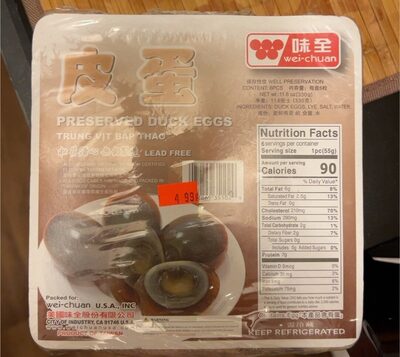
Auto-generated content. This description was generated automatically and is pending editorial review. Inaccuracies are possible. Found a mistake? Contact us.