Enriched Plain/spinach/tomato Rotini
Auto-generated content. This description was generated automatically and is pending editorial review. Inaccuracies are possible. Found a mistake? Contact us.
What it is
Rotini is a type of pasta characterized by its corkscrew shape. It is typically made from durum wheat flour and water, though enriched versions have added vitamins and iron. Spinach or tomato rotini is made by adding vegetable purees or powders to the dough.
Why it's used
Rotini is used as a base for pasta salads, baked pasta dishes, and simple side dishes. Manufacturers use it because it holds sauces well and adds a fun shape to meals. It is commonly found in pasta salads, pasta dinners, and baking mixes.
Health notes
Enriched rotini contains added B vitamins (thiamin, riboflavin, niacin, folic acid) and iron, which are important for energy metabolism and oxygen transport. The FDA considers enriched pasta a staple food that contributes to nutrient intake. The WHO/IARC has not classified pasta itself as carcinogenic. Evidence does not suggest adverse health effects from consuming pasta at typical dietary levels.
Allergen info
Rotini is made from wheat, which is one of the 9 FDA major allergens. It also contains gluten. Not suitable for individuals with celiac disease or gluten sensitivity.
Products containing Enriched Plain/spinach/tomato Rotini
Compare products →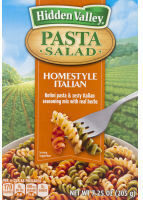 The Hvr Company
Homestyle Italian Pasta Salad
370kcal
10.9Protein
0Fat
73.9Carbs
GENERAL MILLS SALES INC.
Suddenly Salad Classic Pasta Salad 4 Pack
355kcal
10.3Protein
1.5Fat
75.0Carbs
The Hvr Company
Homestyle Italian Pasta Salad
370kcal
10.9Protein
0Fat
73.9Carbs
GENERAL MILLS SALES INC.
Suddenly Salad Classic Pasta Salad 4 Pack
355kcal
10.3Protein
1.5Fat
75.0Carbs
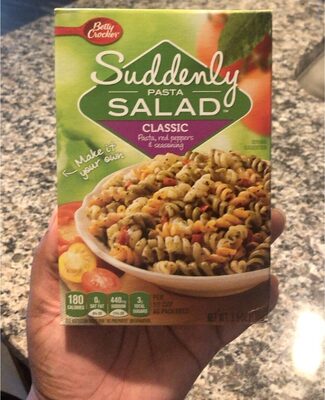 GENERAL MILLS SALES INC.
Suddenly Salad Classic Pasta Salad
355kcal
10.3Protein
1.5Fat
75.0Carbs
GENERAL MILLS SALES INC.
Suddenly Salad Classic Pasta Salad
355kcal
10.3Protein
1.5Fat
75.0Carbs
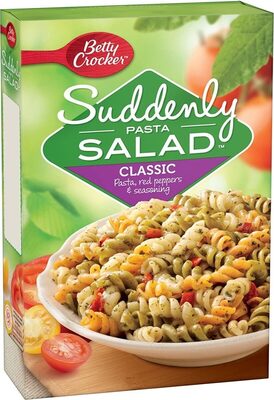 GENERAL MILLS SALES INC.
Betty Crocker Suddenly Salad Classic Pasta Salad Mix
355kcal
10.3Protein
1.5Fat
75.0Carbs
GENERAL MILLS SALES INC.
Betty Crocker Suddenly Salad Classic Pasta Salad Mix
355kcal
10.3Protein
1.5Fat
75.0Carbs
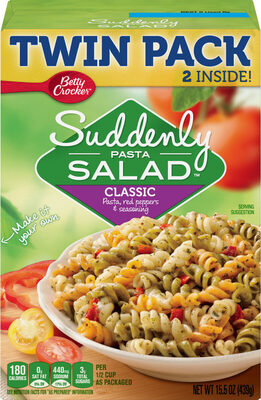 GENERAL MILLS SALES INC.
Suddenly Salad Classic Pasta Salad Twin Pack
355kcal
10.3Protein
1.5Fat
75.0Carbs
GENERAL MILLS SALES INC.
Suddenly Salad Classic Pasta Salad Twin Pack
355kcal
10.3Protein
1.5Fat
75.0Carbs