Filling Ricotta Cheese Whey
What is Filling Ricotta Cheese Whey?
Ricotta cheese whey is the liquid byproduct left over after making ricotta cheese. It is primarily composed of water, lactose (milk sugar), and whey proteins. This liquid is often further processed to concentrate its components.
Is Filling Ricotta Cheese Whey vegan?
No. Filling Ricotta Cheese Whey is animal-derived, so it is not vegan.
Is Filling Ricotta Cheese Whey gluten-free?
It does not contain gluten.
Is Filling Ricotta Cheese Whey a major allergen?
Ricotta cheese whey is derived from milk, which is one of the 9 FDA major allergens.
What is Filling Ricotta Cheese Whey used for?
Manufacturers use ricotta cheese whey as a source of protein and lactose in food products.
Is Filling Ricotta Cheese Whey safe?
Ricotta cheese whey is generally recognized as safe (GRAS) by the FDA for use in food.
Why it's used
Manufacturers use ricotta cheese whey as a source of protein and lactose in food products. It can also contribute to moisture and texture. It is commonly found in pasta fillings, baked goods, and dairy-based products.
Health notes
Ricotta cheese whey is generally recognized as safe (GRAS) by the FDA for use in food. It is a source of protein and lactose, which are common dietary components. Regulatory bodies like JECFA and EFSA have evaluated whey proteins and lactose, generally finding them safe for consumption within typical dietary levels. No significant health controversies are associated with its use at normal levels.
Allergen info
Ricotta cheese whey is derived from milk, which is one of the 9 FDA major allergens. It does not contain gluten.
Foods that contain Filling Ricotta Cheese Whey
Compare products →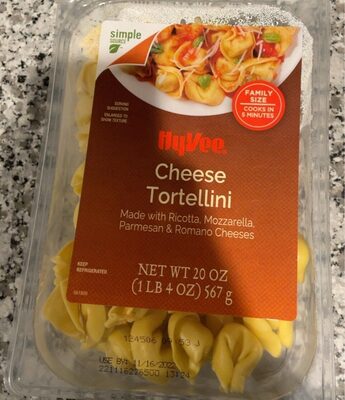 Hy-Vee, Inc.
Cheese Tortellini Made With Ricotta, Mozzarellla, Parmesan & Romano Cheeses, Cheese
High in cholesterol — 22% DV per serving
—kcal
10.5Protein
6.3Fat
41.0Carbs
Hy-Vee, Inc.
Cheese Tortellini Made With Ricotta, Mozzarellla, Parmesan & Romano Cheeses, Cheese
High in cholesterol — 22% DV per serving
—kcal
10.5Protein
6.3Fat
41.0Carbs
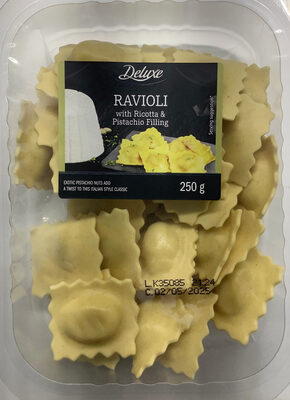 Sun Beach Accessories
Ricotta Cheese And Pistachio Ravioli Stuffed Pasta, Ricotta Cheese
High in sodium — 20% DV per serving
High in saturated fat — 25% DV per serving
High in cholesterol — 22% DV per serving
304kcal
10.4Protein
10.4Fat
40.8Carbs
Wegmans Food Markets, Inc.
Cheese & Spinach Ravioli, Cheese & Spinach
High in sodium — 22% DV per serving
270kcal
9.0Protein
9.0Fat
37.1Carbs
Sun Beach Accessories
Ricotta Cheese And Pistachio Ravioli Stuffed Pasta, Ricotta Cheese
High in sodium — 20% DV per serving
High in saturated fat — 25% DV per serving
High in cholesterol — 22% DV per serving
304kcal
10.4Protein
10.4Fat
40.8Carbs
Wegmans Food Markets, Inc.
Cheese & Spinach Ravioli, Cheese & Spinach
High in sodium — 22% DV per serving
270kcal
9.0Protein
9.0Fat
37.1Carbs
Learn more
Auto-generated content. This description was generated automatically and is pending editorial review. Inaccuracies are possible. Found a mistake? Contact us.