Fried Pork Skin
Auto-generated content. This description was generated automatically and is pending editorial review. Inaccuracies are possible. Found a mistake? Contact us.
What it is
Fried pork skin, also known as pork rinds or cracklings, is a snack food made by frying or roasting pork skin until it is crisp. The process typically involves boiling the skin to remove fat, then deep-frying it in hot oil until it puffs up and becomes crunchy. It is often seasoned with salt or other flavorings.
Why it's used
Fried pork skin is primarily used as a crunchy snack food, often seasoned with various flavors like salt and vinegar, barbecue, or spicy chili. It is also sometimes used as a crunchy topping for dishes or as a breading alternative for fried foods, adding texture and a savory flavor.
Health notes
Fried pork skin is generally recognized as safe (GRAS) by the FDA when used as a food ingredient. It is a source of protein and fat, and can be high in sodium depending on seasoning. Regulatory bodies like JECFA and EFSA have evaluated many food ingredients, but specific evaluations for fried pork skin itself are not widely publicized. Because it is fried, it can be high in calories and fat, and some preparations may contain high levels of sodium.
Allergen info
Fried pork skin is not derived from any of the FDA's nine major allergens. It does not contain gluten.
Products containing Fried Pork Skin
Compare products →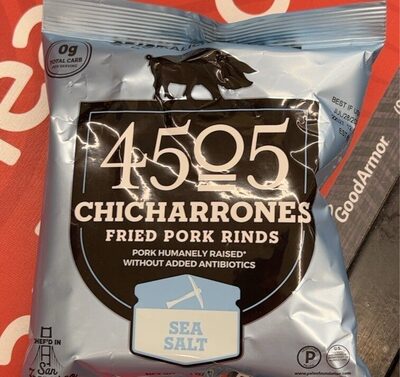 4505 Meats
Sea Salt Chicharrones Fried Pork Rinds, Sea Salt
571kcal
57.1Protein
35.7Fat
0Carbs
Kitchen Cooked Inc.
Bar-B-Q Flavored Pork Rinds, Bar-B-Q
571kcal
50Protein
42.9Fat
0Carbs
Kitchen Cooked Inc.
Hot & Spicy Flavored Pork Rinds, Hot & Spicy
571kcal
50Protein
42.9Fat
0Carbs
Kitchen Cooked Inc.
Hot & Spicy Flavored Pork Rinds, Hot & Spicy
571kcal
50Protein
42.9Fat
0Carbs
Kitchen Cooked Inc.
Classic Pork Rinds, Classic
571kcal
50Protein
42.9Fat
0Carbs
4505 Meats
Sea Salt Chicharrones Fried Pork Rinds, Sea Salt
571kcal
57.1Protein
35.7Fat
0Carbs
Kitchen Cooked Inc.
Bar-B-Q Flavored Pork Rinds, Bar-B-Q
571kcal
50Protein
42.9Fat
0Carbs
Kitchen Cooked Inc.
Hot & Spicy Flavored Pork Rinds, Hot & Spicy
571kcal
50Protein
42.9Fat
0Carbs
Kitchen Cooked Inc.
Hot & Spicy Flavored Pork Rinds, Hot & Spicy
571kcal
50Protein
42.9Fat
0Carbs
Kitchen Cooked Inc.
Classic Pork Rinds, Classic
571kcal
50Protein
42.9Fat
0Carbs
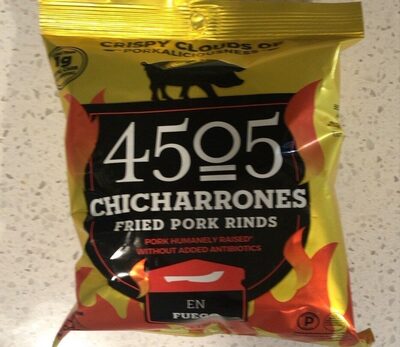 4505 Meats
En Fuego Chicharrones Fried Pork Rinds, En Fuego
571kcal
50Protein
42.9Fat
7.1Carbs
Snak-King Corp.
Classic Fried Pork Skins Chicharrones, Classic
533kcal
60Protein
33.3Fat
0Carbs
4505 Meats
En Fuego Chicharrones Fried Pork Rinds, En Fuego
571kcal
50Protein
42.9Fat
7.1Carbs
Snak-King Corp.
Classic Fried Pork Skins Chicharrones, Classic
533kcal
60Protein
33.3Fat
0Carbs
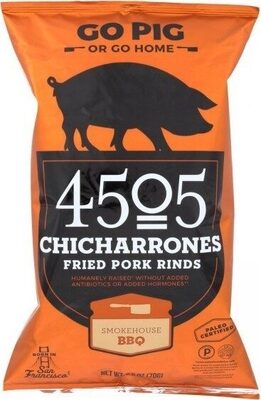 4505 Meats
BBQ Seasoned Chicharrones Fried Pork Rinds, BBQ Seasoned
571kcal
57.1Protein
42.9Fat
0Carbs
4505 Meats
Classic Chili & Salt Chicharrones Fried Pork Rinds, Classic Chili & Salt
571kcal
50Protein
42.9Fat
0Carbs
4505 Meats
BBQ Seasoned Chicharrones Fried Pork Rinds, BBQ Seasoned
571kcal
57.1Protein
42.9Fat
0Carbs
4505 Meats
Classic Chili & Salt Chicharrones Fried Pork Rinds, Classic Chili & Salt
571kcal
50Protein
42.9Fat
0Carbs