Grass-fed And Grass-finished Beef
Auto-generated content. This description was generated automatically and is pending editorial review. Inaccuracies are possible. Found a mistake? Contact us.
What it is
Beef from cattle that ate grass and forage throughout their lives, including their final months. This contrasts with conventional beef production, where cattle may be finished on grain. The diet can influence the meat's nutritional profile and flavor.
Why it's used
Used as a protein source in various food products, often marketed for its perceived health and environmental benefits. It is commonly found in jerky, meat sticks, and other snack items.
Health notes
Beef is a source of protein, iron, zinc, and B vitamins. Some studies suggest grass-fed beef may have a different fatty acid profile, potentially containing more omega-3 fatty acids and conjugated linoleic acid (CLA) than grain-finished beef, though results vary. The U.S. Food and Drug Administration (FDA) does not specifically regulate 'grass-fed' claims beyond general labeling requirements, but the USDA oversees the 'grass-fed' marketing claim. International bodies like the European Food Safety Authority (EFSA) and the Joint FAO/WHO Expert Committee on Food Additives (JECFA) have evaluated various aspects of beef consumption but do not set specific limits for 'grass-fed' versus 'grain-finished' types.
Allergen info
Beef is not one of the nine major allergens. It does not contain gluten.
Products containing Grass-fed And Grass-finished Beef
Compare products →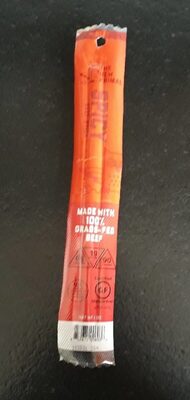 The New Primal, LLC
Spicy Beef Stick, Spicy Beef
286kcal
25Protein
17.9Fat
3.6Carbs
The New Primal, LLC
Spicy Beef Stick, Spicy Beef
286kcal
25Protein
17.9Fat
3.6Carbs
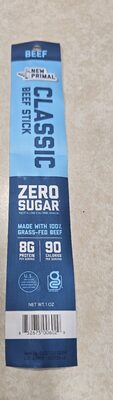 The New Primal, LLC
Classic Beef Stick, Classic Beef
321kcal
28.6Protein
21.4Fat
3.6Carbs
The New Primal, LLC
Classic Beef Stick, Classic Beef
321kcal
28.6Protein
21.4Fat
3.6Carbs