Gum Arabic Corn Syrup
Auto-generated content. This description was generated automatically and is pending editorial review. Inaccuracies are possible. Found a mistake? Contact us.
What it is
Gum arabic, also known as acacia gum, is a natural gum made from the hardened sap of the acacia tree. It is harvested from wild trees in the Sahel region of Africa. The sap is collected, dried, and then ground into a powder.
Why it's used
Manufacturers use gum arabic as a stabilizer, emulsifier, and thickener in foods. It helps prevent ingredients from separating and gives products a smoother texture. It is commonly found in confectionery like candy and chocolate, as well as in baked goods and beverages.
Health notes
Gum arabic is generally recognized as safe (GRAS) by the U.S. Food and Drug Administration (FDA) for use in food. It is primarily composed of soluble fiber, which may aid digestion and promote gut health. International bodies like the Joint FAO/WHO Expert Committee on Food Additives (JECFA) and the European Food Safety Authority (EFSA) have evaluated gum arabic, and it is considered safe for consumption. There are no widespread controversies regarding its use at typical dietary levels.
Allergen info
Gum arabic is not derived from any of the nine major allergens recognized by the FDA. It does not contain gluten.
Products containing Gum Arabic Corn Syrup
Compare products →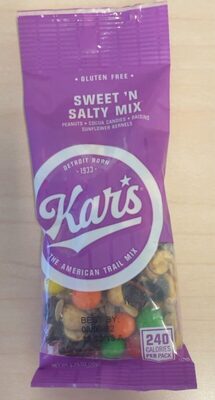 Kar Nut Products Company
Sweet 'N Salty Mix
High in saturated fat — 22% DV per serving
480kcal
14Protein
30Fat
48Carbs
Regal Health Food International, Inc.
Milk Chocolate Raisins, Milk Chocolate
667kcal
10Protein
16.7Fat
70Carbs
Kar Nut Products Company
Sweet 'N Salty Mix
High in saturated fat — 22% DV per serving
480kcal
14Protein
30Fat
48Carbs
Regal Health Food International, Inc.
Milk Chocolate Raisins, Milk Chocolate
667kcal
10Protein
16.7Fat
70Carbs