Long Grain Enriched Parboiled Rice
Auto-generated content. This description was generated automatically and is pending editorial review. Inaccuracies are possible. Found a mistake? Contact us.
What it is
Long grain rice is a type of rice that is longer than it is wide. Parboiled rice is rice that has been partially boiled in the husk. Enriched rice has added nutrients, typically iron and B vitamins like folic acid, thiamin, and niacin, which are often lost during processing.
Why it's used
Enriched parboiled long grain rice is used as a staple carbohydrate in many dishes. Its longer grains stay separate and fluffy after cooking, making it ideal for side dishes, casseroles, and as a base for meals like fried rice or pilafs. Manufacturers add it for its texture and to replace nutrients lost during milling.
Health notes
Enriched rice is generally recognized as safe (GRAS) by the FDA. The added nutrients contribute to meeting daily dietary requirements. The World Health Organization (WHO) and the Joint FAO/WHO Expert Committee on Food Additives (JECFA) have evaluated many food additives, including vitamins and minerals, and have established acceptable daily intakes for them. Evidence does not suggest adverse health effects from consuming enriched rice at typical dietary levels.
Allergen info
Rice is not one of the 9 FDA major allergens. It does not contain gluten.
Products containing Long Grain Enriched Parboiled Rice
Compare products → Ajinomoto Foods North America, Inc.
Chimichanga Steak & Cheese, Bold
High in sodium — 28% DV per serving
High in saturated fat — 23% DV per serving
246kcal
9.2Protein
10.6Fat
27.5Carbs
Ajinomoto Foods North America, Inc.
Chimichanga, Steak & Cheese
High in sodium — 27% DV per serving
High in saturated fat — 23% DV per serving
246kcal
9.2Protein
10.6Fat
28.9Carbs
Ajinomoto Foods North America, Inc.
Chimichanga Steak & Cheese, Bold
High in sodium — 28% DV per serving
High in saturated fat — 23% DV per serving
246kcal
9.2Protein
10.6Fat
27.5Carbs
Ajinomoto Foods North America, Inc.
Chimichanga, Steak & Cheese
High in sodium — 27% DV per serving
High in saturated fat — 23% DV per serving
246kcal
9.2Protein
10.6Fat
28.9Carbs
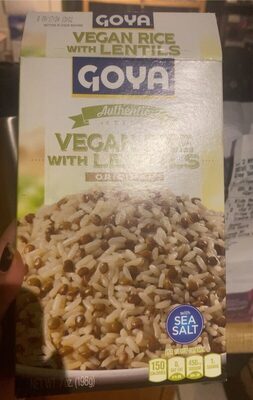 Goya Foods, Inc.
Original Vegan Rice With Lentils, Original
High in sodium — 20% DV per serving
333kcal
11.1Protein
0Fat
75.6Carbs
Goya Foods, Inc.
Rice With Green Peppers & Corn, Mexican Style
High in sodium — 24% DV per serving
333kcal
6.7Protein
0Fat
77.8Carbs
Vitarroz International Foods LLC
Vitarroz Rice & Black Beans, 8 Oz
High in sodium — 20% DV per serving
356kcal
8.9Protein
0Fat
77.8Carbs
Goya Foods, Inc.
Original Vegan Rice With Lentils, Original
High in sodium — 20% DV per serving
333kcal
11.1Protein
0Fat
75.6Carbs
Goya Foods, Inc.
Rice With Green Peppers & Corn, Mexican Style
High in sodium — 24% DV per serving
333kcal
6.7Protein
0Fat
77.8Carbs
Vitarroz International Foods LLC
Vitarroz Rice & Black Beans, 8 Oz
High in sodium — 20% DV per serving
356kcal
8.9Protein
0Fat
77.8Carbs