Non-fat Ricotta Cheese
What is Non-fat Ricotta Cheese?
Non-fat ricotta cheese is a fresh, soft, and mild-tasting cheese made from skimmed milk. It is produced by heating milk, adding an acid (like vinegar or lemon juice) to curdle it, and then draining off the whey. The resulting curds are then lightly salted and packaged.
Is Non-fat Ricotta Cheese vegan?
No. Non-fat Ricotta Cheese is animal-derived, so it is not vegan.
Is Non-fat Ricotta Cheese gluten-free?
It does not contain gluten.
Is Non-fat Ricotta Cheese a major allergen?
Non-fat ricotta cheese is derived from milk and is therefore a major allergen.
What is Non-fat Ricotta Cheese used for?
Manufacturers add non-fat ricotta cheese for its creamy texture and mild flavor, acting as a protein source and binder.
Is Non-fat Ricotta Cheese safe?
Non-fat ricotta cheese is generally recognized as safe (GRAS) by the FDA.
Why it's used
Manufacturers add non-fat ricotta cheese for its creamy texture and mild flavor, acting as a protein source and binder. It is commonly found in Italian-American dishes like lasagna, stuffed shells, ravioli, and as a filling for pastries and desserts.
Health notes
Non-fat ricotta cheese is generally recognized as safe (GRAS) by the FDA. It is a good source of protein and calcium. International bodies like JECFA and EFSA have evaluated cheese and dairy products, generally considering them safe for consumption. No specific health controversies are associated with non-fat ricotta cheese at typical intake levels.
Allergen info
Non-fat ricotta cheese is derived from milk and is therefore a major allergen. It does not contain gluten.
Foods that contain Non-fat Ricotta Cheese
Compare products →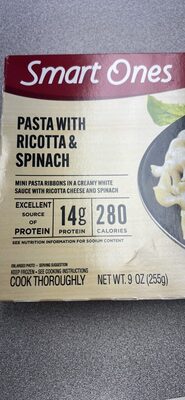 H.J. Heinz Company
Pasta With Ricotta And Spinach
High in sodium — 25% DV per serving
114kcal
5.5Protein
2.0Fat
18.0Carbs
The Minute Maid Company
Pasta With Ricotta And Spinach Mini Pasta Ribbons In A Creamy White Sauce With Ricotta Cheese And Spinach, Pasta With Ricotta And Spinach
High in sodium — 22% DV per serving
110kcal
5.5Protein
2.0Fat
16.9Carbs
Kraft Heinz Foods Company
Savory Italian Recipes Lasagna Ribbons In A Meat Sauce With Part-Skim Mozzarella Cheese, Lasagna Bake With Meat Sauce
High in sodium — 28% DV per serving
118kcal
5.1Protein
2.0Fat
20Carbs
H.J. Heinz Company
Pasta With Ricotta And Spinach
High in sodium — 25% DV per serving
114kcal
5.5Protein
2.0Fat
18.0Carbs
The Minute Maid Company
Pasta With Ricotta And Spinach Mini Pasta Ribbons In A Creamy White Sauce With Ricotta Cheese And Spinach, Pasta With Ricotta And Spinach
High in sodium — 22% DV per serving
110kcal
5.5Protein
2.0Fat
16.9Carbs
Kraft Heinz Foods Company
Savory Italian Recipes Lasagna Ribbons In A Meat Sauce With Part-Skim Mozzarella Cheese, Lasagna Bake With Meat Sauce
High in sodium — 28% DV per serving
118kcal
5.1Protein
2.0Fat
20Carbs
Learn more
Auto-generated content. This description was generated automatically and is pending editorial review. Inaccuracies are possible. Found a mistake? Contact us.