Organic Chia Oil
Auto-generated content. This description was generated automatically and is pending editorial review. Inaccuracies are possible. Found a mistake? Contact us.
What it is
Organic chia oil is extracted from the seeds of the chia plant (Salvia hispanica L.). The seeds are typically cold-pressed to yield a clear to yellowish oil rich in omega-3 fatty acids, particularly alpha-linolenic acid (ALA). It has a mild flavor and is valued for its nutritional profile.
Why it's used
Manufacturers use organic chia oil as a source of healthy fats and omega-3s in foods like juices, plant-based beverages, and smoothies. It can also function as a mild flavor enhancer and contribute to the texture of certain products. Its presence is often highlighted for its nutritional benefits.
Health notes
Organic chia oil is generally recognized as safe (GRAS) by the FDA for use in food. It is a source of ALA, an essential fatty acid that the body can convert into EPA and DHA, though the conversion rate is low. The Joint FAO/WHO Expert Committee on Food Additives (JECFA) has evaluated chia seeds and their components. Evidence suggests that omega-3 fatty acids, like those found in chia oil, may support heart health when consumed as part of a balanced diet.
Allergen info
Chia seeds are not one of the FDA's nine major allergens. Chia oil is not derived from any of the major allergens and is considered gluten-free.
Products containing Organic Chia Oil
Compare products →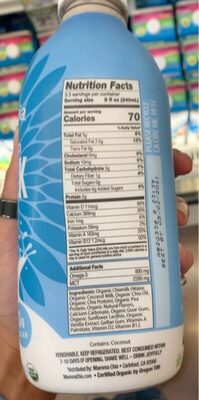 Mamma Chia, LLC
Unsweetened Vanilla Chiamilk, Unsweetened Vanilla
29kcal
0.8Protein
2.1Fat
1.2Carbs
Mamma Chia, LLC
Tropical Mango Organic Chia Protein Smoothie, Tropical Mango
53kcal
3.6Protein
2.5Fat
4.2Carbs
Mamma Chia, LLC
Strawberry Banana Chia Protein Smoothie, Strawberry Banana
53kcal
3.6Protein
2.5Fat
4.4Carbs
BetterBody Foods & Nutrition, LLC
Organic Liquid Chia, Mild
917kcal
0Protein
100Fat
0Carbs
Mamma Chia, LLC
Unsweetened Vanilla Chiamilk, Unsweetened Vanilla
29kcal
0.8Protein
2.1Fat
1.2Carbs
Mamma Chia, LLC
Tropical Mango Organic Chia Protein Smoothie, Tropical Mango
53kcal
3.6Protein
2.5Fat
4.2Carbs
Mamma Chia, LLC
Strawberry Banana Chia Protein Smoothie, Strawberry Banana
53kcal
3.6Protein
2.5Fat
4.4Carbs
BetterBody Foods & Nutrition, LLC
Organic Liquid Chia, Mild
917kcal
0Protein
100Fat
0Carbs