Organic Pearled Barley
Auto-generated content. This description was generated automatically and is pending editorial review. Inaccuracies are possible. Found a mistake? Contact us.
What it is
Pearled barley is a type of barley grain that has had its outer hull and bran layer removed through a polishing process. This makes it cook faster and have a smoother texture than hulled barley. It is a whole grain, though less so than hulled barley due to the removal of the bran.
Why it's used
Manufacturers use pearled barley as a hearty grain in soups, stews, and side dishes. Its chewy texture and mild, nutty flavor make it a versatile addition to dishes like vegetable barley soup or beef barley soup. It can also be used in grain salads or as a base for pilafs.
Health notes
Pearled barley is generally recognized as safe (GRAS) by the FDA for use in food. It is a source of dietary fiber, which can contribute to digestive health. International bodies like JECFA and EFSA have evaluated barley and its components, generally finding them safe for consumption. No specific health claims are approved for pearled barley itself, but it is part of a healthy diet that includes whole grains.
Allergen info
Barley is a grain that contains gluten. Gluten is not one of the 9 major allergens recognized by the FDA, but it is a concern for individuals with celiac disease or non-celiac gluten sensitivity.
Products containing Organic Pearled Barley
Compare products →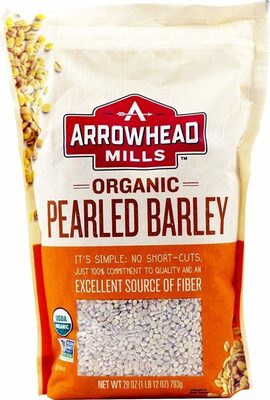 The Hain Celestial Group, Inc.
Organic Pearled Barley
364kcal
9.1Protein
1.1Fat
77.3Carbs
The Hain Celestial Group, Inc.
Organic Pearled Barley
364kcal
9.1Protein
1.1Fat
77.3Carbs