Pecorino Romano Dop
What is Pecorino Romano Dop?
Pecorino Romano is a hard, salty Italian cheese made from sheep's milk. The "DOP" (Denominazione di Origine Protetta) designation means it must be produced in specific regions of Italy (Lazio, Sardinia, and the province of Grosseto in Tuscany) using traditional methods. It is aged for at least five months, developing a firm texture and a distinct sharp, pungent flavor.
Is Pecorino Romano Dop vegan?
No. Pecorino Romano Dop is animal-derived, so it is not vegan.
Is Pecorino Romano Dop a major allergen?
Pecorino Romano is derived from sheep's milk, which is a major allergen.
What is Pecorino Romano Dop used for?
Manufacturers add Pecorino Romano to prepared foods primarily for its strong, salty, and tangy flavor.
Is Pecorino Romano Dop safe?
Pecorino Romano is a food product regulated by the FDA as a dairy item, not as a food additive.
Why it's used
Manufacturers add Pecorino Romano to prepared foods primarily for its strong, salty, and tangy flavor. It is commonly used in pasta dishes, sauces, and fillings for items like ravioli and tortelloni. It can also be grated over soups and salads or eaten as a table cheese.
Health notes
Pecorino Romano is a food product regulated by the FDA as a dairy item, not as a food additive. As a cheese, it contributes protein, fat, and sodium to the diet. There are no specific health controversies associated with Pecorino Romano itself, beyond general dietary considerations for dairy products.
Allergen info
Pecorino Romano is derived from sheep's milk, which is a major allergen.
Foods that contain Pecorino Romano Dop
Compare products →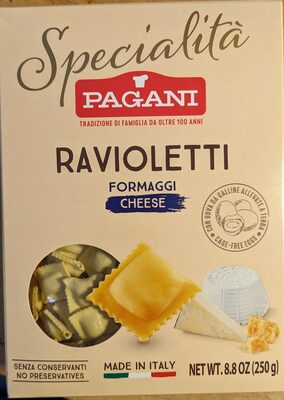 PAGANI
Ravioletti Filled With Cheese
386kcal
14.0Protein
8.8Fat
63.2Carbs
Save Mart Supermarkets Inc.
Four Cheese Tortelloni Premium Stuffed Pasta, Four Cheese Tortelloni
High in sodium — 23% DV per serving
High in saturated fat — 25% DV per serving
High in cholesterol — 20% DV per serving
278kcal
13.0Protein
7.8Fat
38.3Carbs
Save Mart Supermarkets Inc.
Spinach & Three Cheese Ravioli Jumbo Stuffed Premium Pasta, Spinach & Three Cheese Ravioli
High in saturated fat — 22% DV per serving
226kcal
10.4Protein
7.0Fat
28.7Carbs
World Finer Foods, Inc.
Pesto Genovese
367kcal
6.7Protein
36.7Fat
3.3Carbs
PAGANI
Ravioletti Filled With Cheese
386kcal
14.0Protein
8.8Fat
63.2Carbs
Save Mart Supermarkets Inc.
Four Cheese Tortelloni Premium Stuffed Pasta, Four Cheese Tortelloni
High in sodium — 23% DV per serving
High in saturated fat — 25% DV per serving
High in cholesterol — 20% DV per serving
278kcal
13.0Protein
7.8Fat
38.3Carbs
Save Mart Supermarkets Inc.
Spinach & Three Cheese Ravioli Jumbo Stuffed Premium Pasta, Spinach & Three Cheese Ravioli
High in saturated fat — 22% DV per serving
226kcal
10.4Protein
7.0Fat
28.7Carbs
World Finer Foods, Inc.
Pesto Genovese
367kcal
6.7Protein
36.7Fat
3.3Carbs
Learn more
Auto-generated content. This description was generated automatically and is pending editorial review. Inaccuracies are possible. Found a mistake? Contact us.