Previously Frozen Atlantic Salmon
What is Previously Frozen Atlantic Salmon?
Atlantic salmon is a large, migratory fish found in the North Atlantic Ocean. "Previously frozen" means the salmon was frozen at some point after being caught and before being sold for consumption. Freezing helps preserve the fish's quality and safety.
Is Previously Frozen Atlantic Salmon vegan?
No. Previously Frozen Atlantic Salmon is animal-derived, so it is not vegan.
Is Previously Frozen Atlantic Salmon gluten-free?
It does not contain gluten.
Is Previously Frozen Atlantic Salmon a major allergen?
Atlantic salmon is a fish, which is one of the 9 major allergens recognized by the FDA.
What is Previously Frozen Atlantic Salmon used for?
Previously frozen Atlantic salmon is used as a protein source in a variety of dishes, particularly those featuring seafood.
Is Previously Frozen Atlantic Salmon safe?
Atlantic salmon is a source of protein, omega-3 fatty acids, and vitamin D.
Why it's used
Previously frozen Atlantic salmon is used as a protein source in a variety of dishes, particularly those featuring seafood. It is often found in prepared meals, seafood salads, and as a main ingredient in recipes.
Health notes
Atlantic salmon is a source of protein, omega-3 fatty acids, and vitamin D. The FDA considers salmon safe for consumption. Regulatory bodies like the WHO/IARC have evaluated fish consumption and its relation to health. Concerns about contaminants like mercury and PCBs in fish have been studied, with recommendations often suggesting moderation in consumption, especially for certain populations.
Allergen info
Atlantic salmon is a fish, which is one of the 9 major allergens recognized by the FDA. It does not contain gluten.
Foods that contain Previously Frozen Atlantic Salmon
Compare products →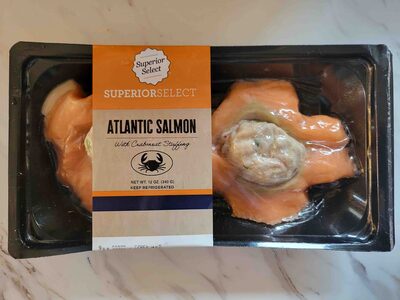 Superior Foods Company
Atlantic Salmon With Crabmeat Stuffing, Crabmeat Stuffing
High in sodium — 25% DV per serving
High in saturated fat — 35% DV per serving
High in cholesterol — 23% DV per serving
235kcal
17.1Protein
15.9Fat
6.5Carbs
Superior Foods Company
Atlantic Salmon With Mediterranean Stuffing, Mediterranean Stuffing
High in saturated fat — 35% DV per serving
High in cholesterol — 28% DV per serving
188kcal
16.5Protein
12.3Fat
—Carbs
Superior Foods Company
Atlantic Salmon
High in saturated fat — 40% DV per serving
High in cholesterol — 28% DV per serving
229kcal
19.4Protein
13.5Fat
—Carbs
Superior Foods Company
Atlantic Salmon With Bourbon Barrel Marinade, Bourbon Barrel Marinade
High in sodium — 23% DV per serving
High in saturated fat — 20% DV per serving
High in cholesterol — 25% DV per serving
225kcal
19.7Protein
13.4Fat
4.9Carbs
Superior Foods Company
Atlantic Salmon Portions
212kcal
20Protein
12.9Fat
0Carbs
Superior Foods Company
Spinach & Feta Stuffed Atlantic Salmon Portions, Spinach & Feta
High in saturated fat — 35% DV per serving
High in cholesterol — 28% DV per serving
188kcal
16.5Protein
12.3Fat
1.8Carbs
Superior Foods Company
Atlantic Salmon With Crabmeat Stuffing, Crabmeat Stuffing
High in sodium — 25% DV per serving
High in saturated fat — 35% DV per serving
High in cholesterol — 23% DV per serving
235kcal
17.1Protein
15.9Fat
6.5Carbs
Superior Foods Company
Atlantic Salmon With Mediterranean Stuffing, Mediterranean Stuffing
High in saturated fat — 35% DV per serving
High in cholesterol — 28% DV per serving
188kcal
16.5Protein
12.3Fat
—Carbs
Superior Foods Company
Atlantic Salmon
High in saturated fat — 40% DV per serving
High in cholesterol — 28% DV per serving
229kcal
19.4Protein
13.5Fat
—Carbs
Superior Foods Company
Atlantic Salmon With Bourbon Barrel Marinade, Bourbon Barrel Marinade
High in sodium — 23% DV per serving
High in saturated fat — 20% DV per serving
High in cholesterol — 25% DV per serving
225kcal
19.7Protein
13.4Fat
4.9Carbs
Superior Foods Company
Atlantic Salmon Portions
212kcal
20Protein
12.9Fat
0Carbs
Superior Foods Company
Spinach & Feta Stuffed Atlantic Salmon Portions, Spinach & Feta
High in saturated fat — 35% DV per serving
High in cholesterol — 28% DV per serving
188kcal
16.5Protein
12.3Fat
1.8Carbs
Auto-generated content. This description was generated automatically and is pending editorial review. Inaccuracies are possible. Found a mistake? Contact us.