Auto-generated content.
This description was generated automatically and is pending editorial review.
Inaccuracies are possible. Found a mistake? Contact us.
Source
Not animal-derived
Allergen
No
Role in food
Mustard seeds are primarily used to make mustard condiments, which add a pungent flavor …
What it is
Red and green mustard are varieties of mustard plants (Brassica juncea) cultivated for their seeds and leaves. The seeds are typically ground and mixed with water, vinegar, and spices to create a condiment. The leaves can be eaten fresh in salads or cooked like other leafy greens.
Why it's used
Mustard seeds are primarily used to make mustard condiments, which add a pungent flavor and slight heat to a wide range of foods. The leaves are used as a vegetable in salads, stir-fries, and as a side dish. Manufacturers use mustard seeds and prepared mustard in dressings, sauces, marinades, and processed meats.
Health notes
Mustard is generally recognized as safe (GRAS) by the FDA when used as a food ingredient. It is a source of various nutrients and compounds that may have health benefits. Some research suggests potential antioxidant and anti-inflammatory properties, though more studies are needed. JECFA has evaluated mustard seeds and preparations, and EFSA has evaluated mustard as a flavoring. Typical consumption levels are not associated with adverse health effects.
Allergen info
Mustard is one of the nine FDA major food allergens. It is important for individuals with mustard allergies to check ingredient labels carefully.
Note:
This site presents label data from USDA FoodData Central for general information. It is not medical advice.
Check the package label; formulations change.
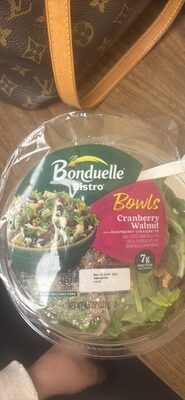 Ready Pac Produce, Inc.
Cranberry Walnut Bed Of Baby Lettuces, Greens, Dried Cranberries, Candied Walnuts, Feta Cheese With Flat Bread Chips, All Natural Raspberry Vinaigrette Vegetarian Salad, Cranberry Walnut
High in sodium — 21% DV per serving
High in added sugars — 26% DV per serving
156kcal
5.5Protein
7.0Fat
18.0Carbs
Ready Pac Produce, Inc.
Cranberry Walnut Bed Of Baby Lettuces, Greens, Dried Cranberries, Candied Walnuts, Feta Cheese With Flat Bread Chips, All Natural Raspberry Vinaigrette Vegetarian Salad, Cranberry Walnut
High in sodium — 21% DV per serving
High in added sugars — 26% DV per serving
156kcal
5.5Protein
7.0Fat
18.0Carbs