Roasted And Salted Pecans
What is Roasted And Salted Pecans?
Pecans are the edible seeds of a type of hickory tree native to North America. They are typically roasted to enhance their flavor and texture, and then salted for taste. This process can be done commercially or at home.
Is Roasted And Salted Pecans vegan?
Roasted And Salted Pecans is not animal-derived. Products that contain it can still include other animal-derived ingredients, so check the full ingredient list.
Is Roasted And Salted Pecans a major allergen?
Pecans are tree nuts, which are one of the 9 major allergens recognized by the FDA.
What is Roasted And Salted Pecans used for?
Roasted and salted pecans are often used as a snack on their own or as an ingredient in trail mixes, baked goods, and salads.
Is Roasted And Salted Pecans safe?
Pecans are a source of healthy fats, fiber, and various vitamins and minerals.
Why it's used
Roasted and salted pecans are often used as a snack on their own or as an ingredient in trail mixes, baked goods, and salads. Manufacturers add salt to improve flavor and roasting to develop a richer taste and crunchier texture.
Health notes
Pecans are a source of healthy fats, fiber, and various vitamins and minerals. The FDA considers pecans to be Generally Recognized As Safe (GRAS). While generally considered healthy, the added sodium from salt can be a concern for individuals monitoring their intake. JECFA and EFSA have not specifically evaluated salted pecans as a distinct food item.
Allergen info
Pecans are tree nuts, which are one of the 9 major allergens recognized by the FDA. People with tree nut allergies should avoid this ingredient.
Foods that contain Roasted And Salted Pecans
Compare products →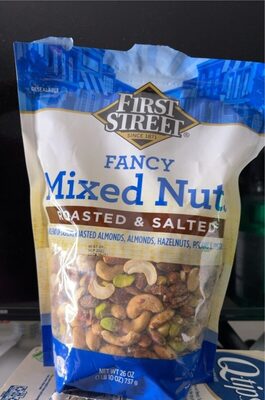 Smart & Final Iris Corporation
Roasted & Salted A Blend Of Cashews, Roasted Almonds, Almonds, Hazelnuts, Pecans & Pistachios Fancy Mixed Nuts, Roasted & Salted
607kcal
17.9Protein
53.6Fat
25Carbs
Smart & Final Iris Corporation
Roasted & Salted A Blend Of Cashews, Roasted Almonds, Almonds, Hazelnuts, Pecans & Pistachios Fancy Mixed Nuts, Roasted & Salted
607kcal
17.9Protein
53.6Fat
25Carbs
Smart & Final Iris Corporation
Greek Yogurt A Blend Of Cranberries, Greek Yogurt Chips, Peanuts, Pumpkin Seed Kernels, Almonds, Cashews & Pecans Trail Mix, Greek Yogurt
500kcal
13.3Protein
30Fat
46.7Carbs
Smart & Final Iris Corporation
Roasted & Salted A Blend Of Cashews, Roasted Almonds, Almonds, Hazelnuts, Pecans & Pistachios Fancy Mixed Nuts, Roasted & Salted
607kcal
17.9Protein
53.6Fat
25Carbs
Smart & Final Iris Corporation
Roasted & Salted A Blend Of Cashews, Roasted Almonds, Almonds, Hazelnuts, Pecans & Pistachios Fancy Mixed Nuts, Roasted & Salted
607kcal
17.9Protein
53.6Fat
25Carbs
Smart & Final Iris Corporation
Greek Yogurt A Blend Of Cranberries, Greek Yogurt Chips, Peanuts, Pumpkin Seed Kernels, Almonds, Cashews & Pecans Trail Mix, Greek Yogurt
500kcal
13.3Protein
30Fat
46.7Carbs
Auto-generated content. This description was generated automatically and is pending editorial review. Inaccuracies are possible. Found a mistake? Contact us.