Auto-generated content.
This description was generated automatically and is pending editorial review.
Inaccuracies are possible. Found a mistake? Contact us.
Source
Not animal-derived
Allergen
No
Role in food
Manufacturers use tapioca starch as a thickener and binder in a variety of foods, …
What it is
Tapioca starch is a carbohydrate extracted from the cassava root, a starchy tuber native to South America. The process involves washing, grinding, and separating the starch from the fibrous material of the root. The resulting powder is a fine, white, flavorless substance.
Why it's used
Manufacturers use tapioca starch as a thickener and binder in a variety of foods, including sauces, gravies, soups, and baked goods. It provides a smooth texture and can help improve the shelf life and mouthfeel of products like puddings and pie fillings. It is also used in gluten-free baking to mimic the texture of wheat flour.
Health notes
Tapioca starch is generally recognized as safe (GRAS) by the FDA for use in food. It is a source of carbohydrates and is primarily used for its functional properties rather than nutritional value. International bodies like JECFA have evaluated tapioca starch, and it is widely used globally. Like other starches, it can affect blood sugar levels.
Allergen info
Tapioca starch is not derived from any of the nine FDA major allergens. It is also gluten-free.
Note:
This site presents label data from USDA FoodData Central for general information. It is not medical advice.
Check the package label; formulations change.
 Kitchens Of The Oceans, Inc.
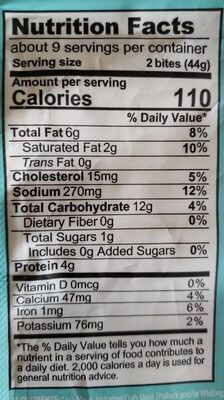
Crab & Cheese Bites, Crab & Cheese
250kcal
9.1Protein
13.6Fat
27.3Carbs
Kitchens Of The Oceans, Inc.
Crab & Cheese Bites, Crab & Cheese
250kcal
9.1Protein
13.6Fat
27.3Carbs