Whole Chicken
What is Whole Chicken?
Whole chicken refers to a chicken that has been processed for consumption. It typically includes the meat, skin, and bones, and may or may not include the giblets (heart, liver, gizzard) and neck. Chickens are raised on farms and processed in regulated facilities.
Is Whole Chicken vegan?
No. Whole Chicken is animal-derived, so it is not vegan.
Is Whole Chicken gluten-free?
It does not contain gluten.
Is Whole Chicken a major allergen?
Chicken is not one of the nine major allergens designated by the FDA.
What is Whole Chicken used for?
Whole chicken is primarily used as a main protein source in home cooking and in prepared foods like rotisserie chicken, soups, and stews.
Is Whole Chicken safe?
Whole chicken is a source of protein, vitamins, and minerals.
Why it's used
Whole chicken is primarily used as a main protein source in home cooking and in prepared foods like rotisserie chicken, soups, and stews. It provides a rich, savory flavor and a tender texture when cooked properly. Manufacturers use it in ready-to-eat meals and deli products.
Health notes
Whole chicken is a source of protein, vitamins, and minerals. The U.S. Department of Agriculture (USDA) regulates the safety and wholesomeness of poultry. There are no specific health concerns associated with consuming whole chicken as part of a balanced diet. Regulatory bodies like the WHO/IARC have not classified chicken as a carcinogen. It is not subject to the same additive regulations as processed ingredients.
Allergen info
Chicken is not one of the nine major allergens designated by the FDA. It does not contain gluten.
Foods that contain Whole Chicken
Compare products →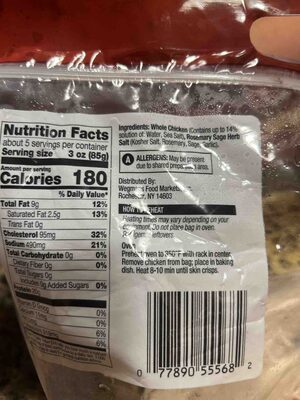
Learn more
Auto-generated content. This description was generated automatically and is pending editorial review. Inaccuracies are possible. Found a mistake? Contact us.