Mustard — Nutrition Facts & Ingredients
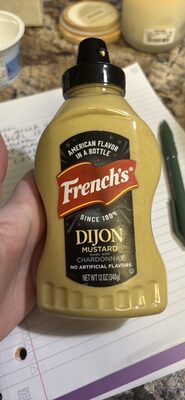
Per serving (1 tsp, 5 g): 5 calories. Per 100 g: 100 calories, 0 g protein, 0 g fat.
Nutrition Facts
Serving size1 tsp (5g)
* The % Daily Value (DV) tells you how much a nutrient in a serving of food contributes to a daily diet. 2,000 calories a day is used for general nutrition advice.
Calculated from USDA FoodData Central per-100 g data for the stated serving; values may differ slightly from the package label because of FDA rounding rules.
Per 100 g and custom amounts
Nutrition per amount
Where to buy
Prices and availability are set by the retailer.Ingredients
1 Grade Mustard Seed, Chardonnay Wine, Citric Acid, Distilled Vinegar, Salt, Spices And Turmeric, Tartaric Acid, Water
Frequently asked questions
How many calories are in Mustard?
Per 100 g of Mustard there are 100 calories.
How much protein is in Mustard?
Per 100 g of Mustard there are 0.0 g protein.
How many carbohydrates are in Mustard?
Per 100 g of Mustard there are 0.0 g carbohydrates.
How much sodium (salt) is in Mustard?
Per 100 g of Mustard there are 2200.0 mg sodium. The daily recommendation is to consume under 2,300 mg of sodium per day.
What are the main ingredients in Mustard?
The main ingredients in Mustard are: 1 Grade Mustard Seed, Chardonnay Wine, Citric Acid, Distilled Vinegar, Salt.
Reviews
Similar products
Level of processing
Health checks
Nutrition breakdown
Macronutrients
Types of fat
Related guides
Learn more about nutrition and food labels:
- "Natural Flavors": What the Term Legally Means
- The 9 Major Allergens and the FASTER Act
- Gluten-Free Labeling: the FDA 20 ppm Rule
- "High Protein" and Other Protein Claims Decoded
- Dietary Fiber: Reaching 28 g a Day
Browse products by nutrient
Find products by calories, protein, sugar and more:
More from Reckitt Benckiser, Inc.
Nutrition facts for other products from Reckitt Benckiser, Inc.:
All Reckitt Benckiser, Inc. products →