Auto-generated content.
This description was generated automatically and is pending editorial review.
Inaccuracies are possible. Found a mistake? Contact us.
Source
Animal-derived
Allergen
No
Role in food
Manufacturers add basil pesto sauce to provide a fresh, herbaceous flavor and aroma. It …
What it is
Basil pesto sauce is a vibrant green sauce originating from the Liguria region of Italy. It is traditionally made by crushing fresh basil leaves with garlic, pine nuts, hard cheese (like Parmesan), and olive oil using a mortar and pestle.
Why it's used
Manufacturers add basil pesto sauce to provide a fresh, herbaceous flavor and aroma. It is commonly used as a sauce for pasta, a spread for sandwiches and pizzas, and as a flavoring for dips and marinades.
Health notes
Basil pesto sauce is generally recognized as safe (GRAS) by the FDA as a food ingredient. The primary ingredients, such as basil and olive oil, are common food items with no specific regulatory limits when consumed as part of a balanced diet. International bodies like JECFA have evaluated many individual food ingredients, but pesto itself is not typically evaluated as a single entity. Evidence does not suggest adverse health effects from typical consumption.
Allergen info
Basil pesto sauce may contain major allergens if cheese (milk) or pine nuts are included. It is not derived from fish, shellfish, peanuts, wheat, soy, sesame, or eggs. Gluten is not typically present unless added during processing.
Note:
This site presents label data from USDA FoodData Central for general information. It is not medical advice.
Check the package label; formulations change.
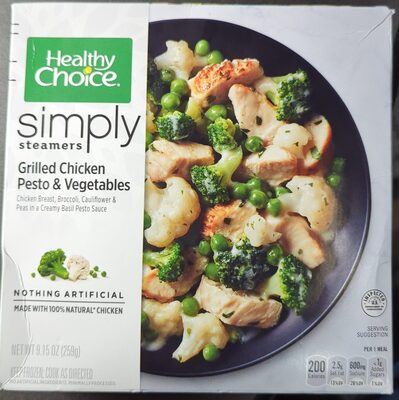 Conagra Brands, Inc.
Grilled Chicken Pesto & Vegetables Chicken Breast, Broccoli, Cauliflower & Peas In A Creamy Basil Pesto Sauce Simply Steamers, Grilled Chicken Pesto & Vegetables
High in sodium — 26% DV per serving
High in cholesterol — 28% DV per serving
77kcal
10.8Protein
1.9Fat
4.2Carbs
Conagra Brands, Inc.
Grilled Chicken Pesto & Vegetables Chicken Breast, Broccoli, Cauliflower & Peas In A Creamy Basil Pesto Sauce Simply Steamers, Grilled Chicken Pesto & Vegetables
High in sodium — 26% DV per serving
High in cholesterol — 28% DV per serving
77kcal
10.8Protein
1.9Fat
4.2Carbs