Beef Meatballs
Auto-generated content. This description was generated automatically and is pending editorial review. Inaccuracies are possible. Found a mistake? Contact us.
What it is
Beef meatballs are ground or minced beef, often mixed with binders like breadcrumbs or eggs, and seasonings. They are typically formed into small balls and then cooked by baking, frying, or simmering in sauce. Meatballs are a popular component in many dishes, especially Italian-American cuisine.
Why it's used
Manufacturers use meatballs as a protein source and a flavorful addition to meals. They are commonly found in pasta dishes, soups, and as appetizers. Their savory taste and satisfying texture make them a versatile ingredient in prepared foods.
Health notes
Beef meatballs are a source of protein and various nutrients. The U.S. Food and Drug Administration (FDA) considers beef to be generally recognized as safe (GRAS) when used as food. Regulatory bodies like the Joint FAO/WHO Expert Committee on Food Additives (JECFA) and the European Food Safety Authority (EFSA) have evaluated beef and its components. Concerns about saturated fat and cholesterol are often discussed in relation to red meat consumption, as outlined in dietary guidelines.
Allergen info
Beef itself is not one of the nine FDA major allergens. However, some meatball recipes may contain other allergens like eggs or wheat (in breadcrumbs) as binders or seasonings. Gluten is not inherently present in beef but may be added through other ingredients.
Products containing Beef Meatballs
Compare products →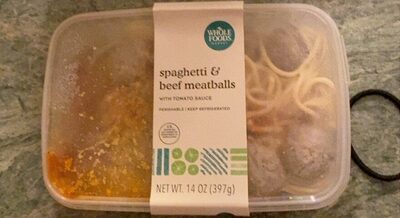 Amazon Fulfillment Services, Inc. - Consumables Private Brands
Spaghetti & Beef Meatballs With Tomato Sauce, Spaghetti & Beef
High in sodium — 53% DV per serving
High in saturated fat — 40% DV per serving
154kcal
6.5Protein
6.5Fat
17.9Carbs
Wal-Mart Stores, Inc.
Tailgate Beef Meatballs, Tailgate Beef
High in saturated fat — 35% DV per serving
High in added sugars — 46% DV per serving
243kcal
7.9Protein
10.7Fat
26.4Carbs
Relish Labs LLC
Cavatappi And Beef Heat & Eat Meatballs, Cavatappi And Beef
High in sodium — 37% DV per serving
High in saturated fat — 35% DV per serving
148kcal
8.4Protein
5.7Fat
17.1Carbs
CAMPBELL SOUP COMPANY
Campbell's Homestyle Italian Wedding Soup, 16.1 oz Can
High in sodium — 32% DV per serving
45kcal
2.9Protein
1.2Fat
5.3Carbs
CAMPBELL SOUP COMPANY
Campbell's Homestyle Italian Wedding Soup, 16.1 oz Can
High in sodium — 32% DV per serving
45kcal
2.9Protein
1.2Fat
5.3Carbs
Amazon Fulfillment Services, Inc. - Consumables Private Brands
Spaghetti & Beef Meatballs With Tomato Sauce, Spaghetti & Beef
High in sodium — 53% DV per serving
High in saturated fat — 40% DV per serving
154kcal
6.5Protein
6.5Fat
17.9Carbs
Wal-Mart Stores, Inc.
Tailgate Beef Meatballs, Tailgate Beef
High in saturated fat — 35% DV per serving
High in added sugars — 46% DV per serving
243kcal
7.9Protein
10.7Fat
26.4Carbs
Relish Labs LLC
Cavatappi And Beef Heat & Eat Meatballs, Cavatappi And Beef
High in sodium — 37% DV per serving
High in saturated fat — 35% DV per serving
148kcal
8.4Protein
5.7Fat
17.1Carbs
CAMPBELL SOUP COMPANY
Campbell's Homestyle Italian Wedding Soup, 16.1 oz Can
High in sodium — 32% DV per serving
45kcal
2.9Protein
1.2Fat
5.3Carbs
CAMPBELL SOUP COMPANY
Campbell's Homestyle Italian Wedding Soup, 16.1 oz Can
High in sodium — 32% DV per serving
45kcal
2.9Protein
1.2Fat
5.3Carbs