Cheddar And Romano
What is Cheddar And Romano?
Cheddar and Romano are both hard, aged cheeses made from cow's milk. Cheddar cheese originated in England and has a sharp, tangy flavor. Romano cheese, originating in Rome, is typically made from sheep's milk and has a saltier, more pungent taste. Both are produced by culturing milk, then separating the curds from the whey, and aging the curds.
Is Cheddar And Romano vegan?
No. Cheddar And Romano is animal-derived, so it is not vegan.
Is Cheddar And Romano gluten-free?
They do not contain gluten.
Is Cheddar And Romano a major allergen?
Cheddar and Romano cheeses are derived from milk, which is one of the 9 FDA major allergens.
What is Cheddar And Romano used for?
These cheeses are added to foods for their distinct savory and salty flavors.
Is Cheddar And Romano safe?
Cheddar and Romano cheeses are generally recognized as safe by the FDA as part of a balanced diet.
Why it's used
These cheeses are added to foods for their distinct savory and salty flavors. They are commonly used in pasta dishes, sauces, baked goods, and as a topping for various savory items. Manufacturers use them to enhance the overall taste profile of packaged foods.
Health notes
Cheddar and Romano cheeses are generally recognized as safe by the FDA as part of a balanced diet. They are a source of protein, calcium, and vitamin B12. Like other dairy products, they contain saturated fat and sodium, and excessive intake of sodium is linked to high blood pressure. JECFA and EFSA have evaluated cheese and dairy products extensively as part of broader food safety assessments.
Allergen info
Cheddar and Romano cheeses are derived from milk, which is one of the 9 FDA major allergens. They do not contain gluten.
Foods that contain Cheddar And Romano
Compare products →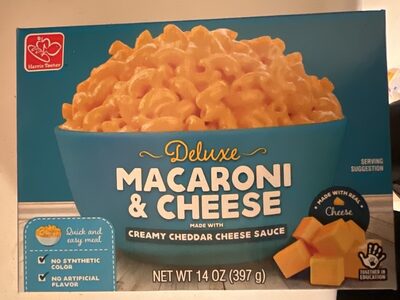 Harris-Teeter Inc.
Deluxe Macaroni & Cheese, Deluxe
High in sodium — 37% DV per serving
327kcal
10.2Protein
9.2Fat
50Carbs
Topco Associates, Inc.
Cheddar Gluten Free Rice Pasta & Cheese, Cheddar
343kcal
7.1Protein
1.4Fat
77.1Carbs
McIlhenny Company
Gluten Free Rice Pasta & Cheddar
214kcal
5.7Protein
1.4Fat
45.7Carbs
Harris-Teeter Inc.
Deluxe Macaroni & Cheese, Deluxe
High in sodium — 37% DV per serving
327kcal
10.2Protein
9.2Fat
50Carbs
Topco Associates, Inc.
Cheddar Gluten Free Rice Pasta & Cheese, Cheddar
343kcal
7.1Protein
1.4Fat
77.1Carbs
McIlhenny Company
Gluten Free Rice Pasta & Cheddar
214kcal
5.7Protein
1.4Fat
45.7Carbs
Learn more
Auto-generated content. This description was generated automatically and is pending editorial review. Inaccuracies are possible. Found a mistake? Contact us.