Auto-generated content.
This description was generated automatically and is pending editorial review.
Inaccuracies are possible. Found a mistake? Contact us.
Source
Animal-derived
Allergen
No
Role in food
Manufacturers add chocolate candy pieces to foods primarily for their flavor, texture, and visual …
What it is
Chocolate candy pieces are small, often colorful, confections made primarily from chocolate, sugar, and sometimes other ingredients like milk solids. They are manufactured by processing cocoa beans into chocolate, which is then formed into small pieces and often coated.
Why it's used
Manufacturers add chocolate candy pieces to foods primarily for their flavor, texture, and visual appeal. They are commonly used in baked goods like cookies, cakes, and brownies, as well as in snack mixes, ice cream, and other desserts to provide a sweet, chocolatey element and a satisfying crunch or chew.
Health notes
Chocolate candy pieces are considered a general food ingredient rather than a specific food additive. As such, they are not subject to individual approval by the FDA in the same way as additives, but their components are regulated. Consumption in moderation is generally considered safe as part of a balanced diet. Like many candies, they are typically high in sugar and fat, which, when consumed in excess, can contribute to dietary concerns. JECFA and EFSA do not typically evaluate composite food items like "chocolate candy pieces" as a single ingredient.
Allergen info
Chocolate candy pieces commonly contain milk and soy, which are major FDA allergens. They may also be processed in facilities that handle peanuts and tree nuts, leading to potential cross-contamination.
Note:
This site presents label data from USDA FoodData Central for general information. It is not medical advice.
Check the package label; formulations change.
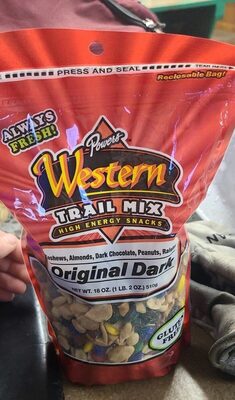 Powers, Inc.
Original Dark Western Trail Mix High Energy Snacks, Original Dark
500kcal
13.3Protein
33.3Fat
43.3Carbs
Powers, Inc.
Original Dark Western Trail Mix High Energy Snacks, Original Dark
500kcal
13.3Protein
33.3Fat
43.3Carbs