Dough: Tapioca Flour
Auto-generated content. This description was generated automatically and is pending editorial review. Inaccuracies are possible. Found a mistake? Contact us.
What it is
Tapioca flour is a starch extracted from the cassava root, a tropical root vegetable native to South America. The cassava root is washed, peeled, and then ground into a pulp. The starch is then separated from the pulp, washed, and dried to create a fine, white flour.
Why it's used
Tapioca flour is often used as a thickener in baking and cooking due to its neutral flavor and ability to create a smooth, glossy texture. It is commonly found in gluten-free products, baked goods, puddings, and sauces. Manufacturers use it to improve the texture and binding properties of foods.
Health notes
Tapioca flour is generally recognized as safe (GRAS) by the FDA for use in food. It is primarily a carbohydrate and provides energy. The Joint FAO/WHO Expert Committee on Food Additives (JECFA) has evaluated tapioca starch and found no safety concerns. Evidence does not suggest adverse health effects from tapioca flour when consumed in typical amounts as part of a balanced diet.
Allergen info
Tapioca flour is not derived from any of the nine FDA major allergens. It is also naturally gluten-free.
Products containing Dough: Tapioca Flour
Compare products →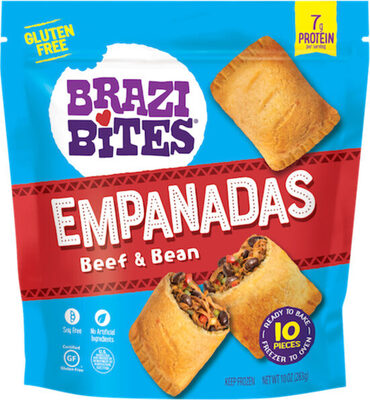 Brazi Bites, LLC
Beef & Bean Empanadas, Beef & Bean
259kcal
9.4Protein
14.1Fat
23.5Carbs
Brazi Bites, LLC
Beef & Bean Empanadas, Beef & Bean
259kcal
9.4Protein
14.1Fat
23.5Carbs
 Brazi Bites, LLC
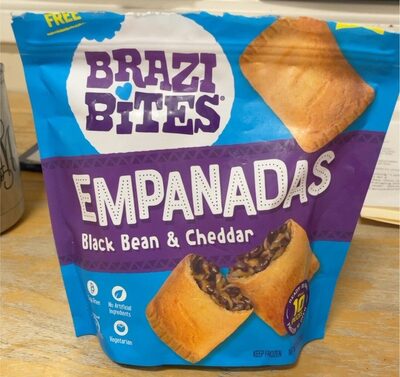
Black Bean & Cheddar Empanadas, Black Bean & Cheddar
247kcal
8.2Protein
10.6Fat
25.9Carbs
Brazi Bites, LLC
Black Bean & Cheddar Empanadas, Black Bean & Cheddar
247kcal
8.2Protein
10.6Fat
25.9Carbs
 Brazi Bites, LLC
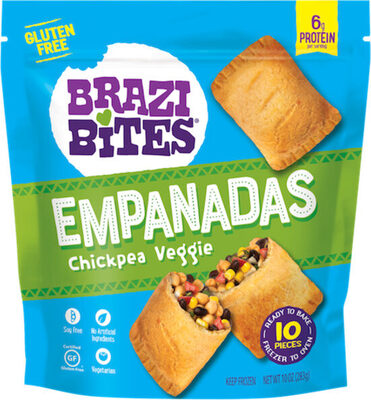
Chickpea Veggie Empanadas, Chickpea Veggie
235kcal
7.1Protein
11.8Fat
27.1Carbs
Brazi Bites, LLC
Chicken & Cheese Tender Chicken Thighs Empanadas, Chicken & Cheese
271kcal
12.9Protein
12.9Fat
25.9Carbs
Brazi Bites, LLC
Cheese & Uncured Pepperoni Pizzanadas, Cheese & Uncured Pepperoni
High in sodium — 27% DV per serving
High in saturated fat — 25% DV per serving
294kcal
9.4Protein
17.6Fat
24.7Carbs
Brazi Bites, LLC
Chickpea Veggie Empanadas, Chickpea Veggie
235kcal
7.1Protein
11.8Fat
27.1Carbs
Brazi Bites, LLC
Chicken & Cheese Tender Chicken Thighs Empanadas, Chicken & Cheese
271kcal
12.9Protein
12.9Fat
25.9Carbs
Brazi Bites, LLC
Cheese & Uncured Pepperoni Pizzanadas, Cheese & Uncured Pepperoni
High in sodium — 27% DV per serving
High in saturated fat — 25% DV per serving
294kcal
9.4Protein
17.6Fat
24.7Carbs