Farm Raised Salmon
Auto-generated content. This description was generated automatically and is pending editorial review. Inaccuracies are possible. Found a mistake? Contact us.
What it is
Farm-raised salmon are salmon raised in controlled environments like pens or tanks, rather than caught in the wild. They are grown to market size and then harvested for consumption. This method allows for a consistent supply and quality of salmon.
Why it's used
Farm-raised salmon is primarily used as a protein source in a wide variety of dishes. It can be cooked in many ways, including baking, grilling, pan-searing, and smoking. It is commonly found in seafood markets and as an ingredient in prepared meals and deli items.
Health notes
Salmon is a good source of protein and omega-3 fatty acids, which are beneficial for heart and brain health. The FDA notes that fish consumption, including salmon, is part of a healthy eating pattern. Farm-raised salmon is not subject to specific FDA regulations as a food additive. Regulatory bodies like EFSA have evaluated fish and seafood, but no specific health claims are tied to farm-raised salmon in general.
Allergen info
Salmon is classified as a major allergen by the FDA because it is a type of fish. Individuals with a fish allergy should avoid consuming salmon.
Products containing Farm Raised Salmon
Compare products →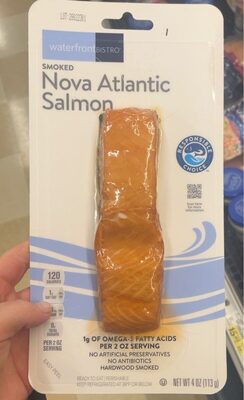 Safeway, Inc.
Smoked Nova Atlantic Salmon, Smoked
High in sodium — 20% DV per serving
211kcal
21.1Protein
14.0Fat
0Carbs
Safeway, Inc.
Smoked Nova Atlantic Salmon, Smoked
High in sodium — 20% DV per serving
211kcal
21.1Protein
14.0Fat
0Carbs