Grape Vinegar
Auto-generated content. This description was generated automatically and is pending editorial review. Inaccuracies are possible. Found a mistake? Contact us.
What it is
Grape vinegar is a type of vinegar made from fermented grape juice, similar to how wine is made. The fermentation process converts sugars in the grapes first into alcohol and then into acetic acid, giving the vinegar its characteristic sour taste and aroma. It is often aged to develop a more complex flavor.
Why it's used
Grape vinegar is used as a flavoring agent and preservative in various food products. Its tangy and slightly sweet profile makes it a popular ingredient in salad dressings, marinades, sauces, and as a condiment for meats and vegetables. It can also be used to add acidity and depth to dishes.
Health notes
In the U.S., grape vinegar is generally recognized as safe (GRAS) by the FDA when used as a food ingredient. Like other vinegars, it is primarily composed of acetic acid and water. Some research suggests that vinegar consumption may have a modest effect on blood sugar levels, but more studies are needed. International bodies like JECFA have evaluated vinegar and its components.
Allergen info
Grape vinegar is not derived from any of the nine FDA major allergens. It does not contain gluten.
Products containing Grape Vinegar
Compare products →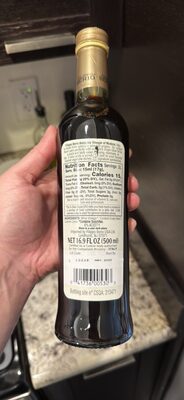 Salov North America Corp.
Balsamic Vinegar Of Modena
65kcal
0Protein
0Fat
17.6Carbs
Wildfare Inc.
Balsamic Vinegar, Balsamic
100kcal
0Protein
0Fat
20Carbs
Salov North America Corp.
Filippo Berio Balsamic Vinegar Of Modena, 8.4 Fl Oz
65kcal
0Protein
0Fat
17.6Carbs
Salov North America Corp.
Balsamic Vinegar Of Modena
65kcal
0Protein
0Fat
17.6Carbs
Wildfare Inc.
Balsamic Vinegar, Balsamic
100kcal
0Protein
0Fat
20Carbs
Salov North America Corp.
Filippo Berio Balsamic Vinegar Of Modena, 8.4 Fl Oz
65kcal
0Protein
0Fat
17.6Carbs